

By Edward Zhang (11/27/26) — London, UK
I thought I was a public transit expert before I moved to London. I've survived the 6 train at rush hour, I've waited 20 minutes for a G train that may or may not exist, and I know exactly which subway car stops in front of the exit. Then I landed at Heathrow, tapped my card at the gate, and the Tube charged me a price I didn't understand for a ride I didn't plan. Two months later, I still check the fare before I check the weather.
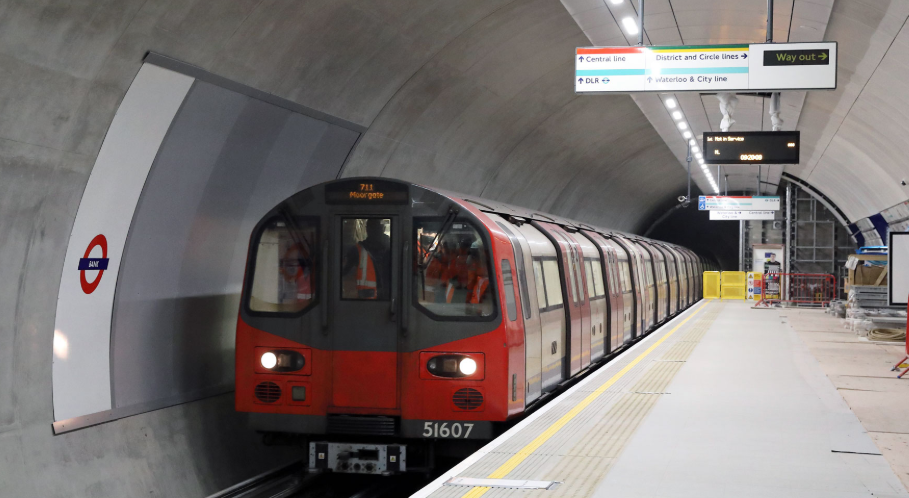
The London Underground is the oldest metro system in the world. Its first line, the Metropolitan Railway, opened between Paddington and Farringdon in January 1863 (Guinness World Records, n.d.). New York didn't open its first subway until 1904. So I wanted to know how the original compares to the one I grew up riding, and whether people who actually live here like it. I found a London commuter who takes the Tube every day and asked him. When I asked if he likes the Tube, he didn't hesitate. "Yeah, I like it, it just gets a little bit expensive sometimes," he told me.
That "sometimes" turned out to be doing a lot of work.
Zones vs. One Flat Fare
The biggest difference is how each city decides what a ride is worth. New York uses one flat fare. Since January 2026, every subway ride costs $3, whether you go one stop or from the Bronx to Brooklyn, and with OMNY nobody pays more than $35 in a rolling seven-day period (MTA, 2025). After 12 rides, the rest of the week is free.
London charges by distance. The city is split into nine fare zones, rippling out from Zone 1 in the center, and you pay based on which zones you cross and what time you travel. As of March 2026, a peak single journey within Zone 1 costs £3.10, and an off-peak one costs £3.00 (Greater London Authority, n.d.). Go further out and the price climbs. Daily and weekly caps keep heavy users from getting wrecked, but a week of unlimited travel in Zones 1 and 2 still caps out at £44.70 (Last Trip, n.d.).
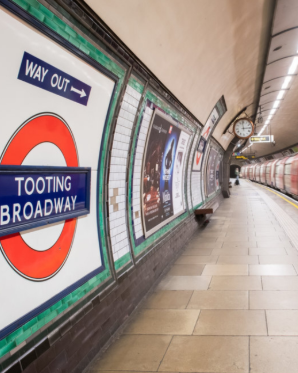
Here's where it gets painful. With the pound sitting around $1.33 this month (Trading Economics, 2026), that Zone 1 single works out to roughly $4.12, and the weekly cap is about $59.
That's almost double New York's $35 weekly cap for a city where I mostly travel within two zones.
The business student in me gets the logic, though. Zone pricing is basically price discrimination: people who use more of the network pay more, and people making short hops in the center pay less than a commuter from Zone 6. New York's flat fare is simpler and arguably fairer to people who live far from Manhattan, since the longest commutes cost the same as the shortest. London's model charges for what you use. New York's charges for getting in the door.
Why Nobody Jumps the Gates in London
The first thing my commuter pointed out was something I'd noticed but never thought about. In New York, watching someone hop a turnstile is basically part of the commute. In London, I have not seen it once. "It's hard to jump the turnstiles here, barely anyone does it, but in New York everyone does," he told me.
The numbers back him up. In late 2022, an MTA panel estimated that about 13.5% of subway riders, roughly 400,000 people a day, didn't pay (Mass Transit, 2023). The rate has since dropped to about 9.8% in early 2025 (Yahoo News, 2025), but the Citizens Budget Commission still estimated the MTA lost $918 million to subway and bus fare evasion in 2024 (Trains, 2025). In London, TfL puts its fare evasion rate at about 3.5%, costing around £130 million a year (IanVisits, n.d.). TfL has even pointed out that if London had New York's evasion rate, it would lose more than £400 million a year (LBC, n.d.).
Part of the answer is the gates themselves. London's barriers are tall paddle gates, not a waist-high metal bar you can vault. But my favorite explanation is the one hiding inside the pricing model. Because London charges by distance, the system needs to know where you got off, so you have to tap out too. That means every station has gates at the exit as well as the entrance. New York's flat fare only cares that you got in, so the exits are open and the emergency doors swing both ways. The zone system that annoys my wallet is the same system that makes fare-dodging a hassle.
That matters for more than fairness. Every dollar that skips the turnstile is a dollar that doesn't fund new trains or better service. One report found New York's 2024 losses alone could have paid for 180 new subway cars (1010 WINS, 2025).
Great Service, Prehistoric Trains
When I asked how efficient the Tube is, my commuter gave it a passing grade with an asterisk. "It's good, but it's very old, some lines are prehistoric," he said. "Some lines don't have AC, and some lines always get delayed, like the Victoria line, or even the Northern line."
He's not exaggerating about the heat. Only about 40% of the Tube network is air-conditioned, and it's the lines closest to the surface, because that's where the heat can actually escape (Time Out London, n.d.). The deep-level lines, including the Central, Northern, Victoria, Jubilee, and Bakerloo, run through tunnels that have been soaking up heat from trains for over a century (Intelligent Transport, n.d.). Riding the Central line in a winter coat is a sauna experience I did not pay for, except I did, in Zone 1 peak fares.
TfL is trying. Its new Piccadilly line trains will be the first deep Tube trains with air conditioning, and they are designed to use 20% less energy than the old fleet (Transport for London, n.d.). That's the sustainability catch with an old system: the tunnels are already built, which is great for the planet, but upgrading anything inside them is slow, expensive, and very, very warm.
The Exchange Rate Tax
Then there's the problem every international student here knows by heart. "The pound is just very expensive, so traveling here as an international student is even more cooked," my commuter said, and I felt that in my soul. Every fare in London gets multiplied by about 1.33 before it hits my bank account (Trading Economics, 2026). And fares are still going up: in March 2026, pay-as-you-go Tube fares rose by about 6% on average, even though daily and weekly caps stayed frozen (Greater London Authority, n.d.). The caps are the student's best friend. If you ride enough in a day or a week, you hit the ceiling and the rest is free, which is the closest thing London has to New York's flat-fare mindset.
So, Which System Wins?
I'm not going to pretend one city figured it all out. New York is cheaper, simpler, and runs 24 hours, but it loses close to a billion dollars a year to people who don't pay. London is older, hotter, and more expensive, but its pricing model quietly forces almost everyone to pay their share, and that revenue goes back into the system. The lesson for the business student in me is that how you price something shapes how people behave. A flat fare is easy to sell. A zone fare is easy to enforce. Maybe the ideal system has New York's prices, London's gates, and somebody else's air conditioning. Until then, I'll keep tapping out, checking my Zone 1 fares, and mentally converting every pound into dollars. And for the record, Mom, I'm walking more.
References
1010 WINS. (2025). NYC transit lost $1 billion to fare evasion in 2024: Report. https://www.audacy.com/1010wins/news/local/nyc-transit-lost-usd1-billion-to-fare-evasion-in-2024-report
Greater London Authority. (n.d.). MD3464 March 2026 Transport for London fare changes. Retrieved November 25, 2026, from https://www.london.gov.uk/md3464-march-2026-transport-london-fare-changes
Guinness World Records. (n.d.). First underground railway system. Retrieved November 25, 2026, from https://www.guinnessworldrecords.com/world-records/first-underground-railway-system
IanVisits. (n.d.). TfL expands crackdown on persistent fare evaders to cut £130m losses. Retrieved November 25, 2026, from https://www.ianvisits.co.uk/articles/tfl-expands-crackdown-on-persistent-fare-evaders-to-cut-130m-losses-80780/
Intelligent Transport. (n.d.). Work continues to keep passengers cool this summer and beyond.
Retrieved November 25, 2026, from https://www.intelligenttransport.com/?p=4509
Last Trip. (n.d.). Use TfL's daily cap to save money while travelling the most. Retrieved November 25, 2026, from https://lasttrip.uk/blog/use-tfl-s-daily-cap-to-save-money-while-travelling-the-most.html
LBC. (n.d.). TfL crack down on ticket fare dodgers. Retrieved November 25, 2026, from https://www.lbc.co.uk/article/tfl-crack-down-ticket-fare-dodgers-5HjdBm4_2/
London commuter. Interview with Edward Zhang about the London Underground [date of interview].
Mass Transit. (2023, May 18). MTA loses an estimated $690 million due to fare and toll evasion. https://www.masstransitmag.com/home/article/53060940/mta-loses-an-estimated-690-million-due-to-fare-and-toll-evasion
Metropolitan Transportation Authority. (2025, September 30). MTA board adopts fare and toll increases to take effect January 2026. https://www.mta.info/press-release/mta-board-adopts-fare-and-toll-increases-take-effect-january-2026
Time Out London. (n.d.). More pictures have been revealed of the Piccadilly line's new air-conditioned trains. Retrieved November 25, 2026, from https://www.timeout.com/london/news/piccadilly-line-trains-new-photographs-092926
Trading Economics. (2026, November 12). British pound hits 4-week low. https://tradingeconomics.com/united-kingdom/currency/news/600568
Trains. (2025, September 12). New York MTA lost $1 billion to fare evasion in 2024, report says. https://www.trains.com/?p=238341
Transport for London. (n.d.). Piccadilly line upgrade. Retrieved November 25, 2026, from https://tfl.gov.uk/travel-information/improvements-and-projects/piccadilly-line-upgrade
Yahoo News. (2025). MTA notches tiny drop in fare-beating, but a huge amount of riders still aren't paying. https://www.yahoo.com/news/articles/mta-notches-tiny-drop-fare-235815580.html
