

By Edward Zhang (10/31/26) — London, UK
Small Bowl, Big City: How a Basement Noodle Shop Survives London’s Food Scene
Before I had even booked my plane ticket, everyone had warned me about British food. They warned that everything was a mess of bland, boring, and fish. My mom was so worried she even offered to raise my monthly allowance just to spare me a semester of beans on toast. One week in, I was homesick, hungry, and seriously wondering whether fish & chips could count as a personality. Driven by my natural roots as a Canadian Chinese person, I naturally wandered off to Chinatown in search of food one day.
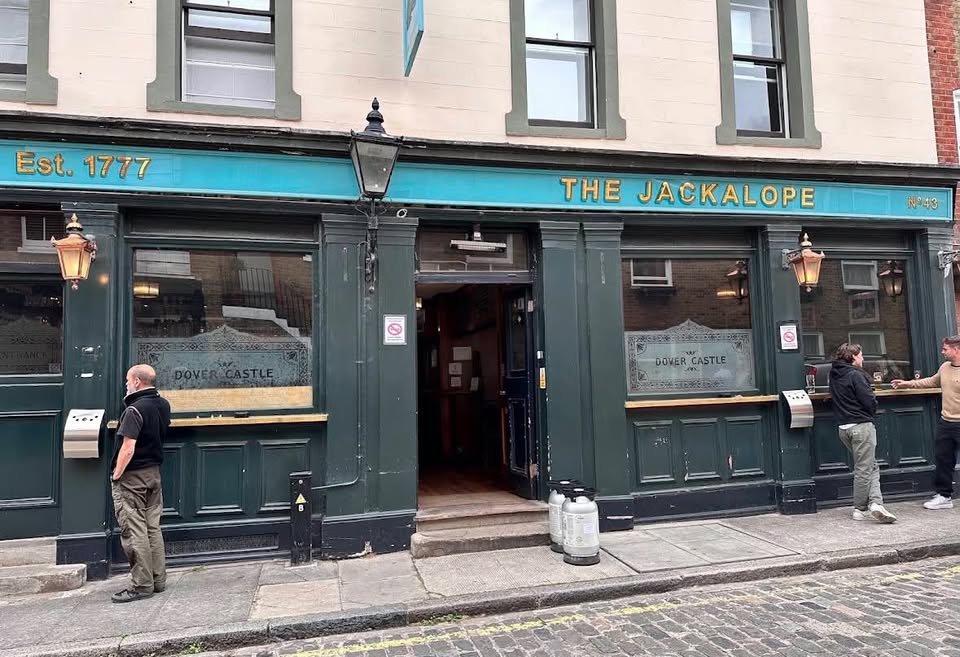
I walked into The Jackalope, a pub on a cobblestone Marylebone mews that has been pouring pints since 1777. I had purposefully searched for a Chinese noodle joint before making the trek, and I was left utterly confused.
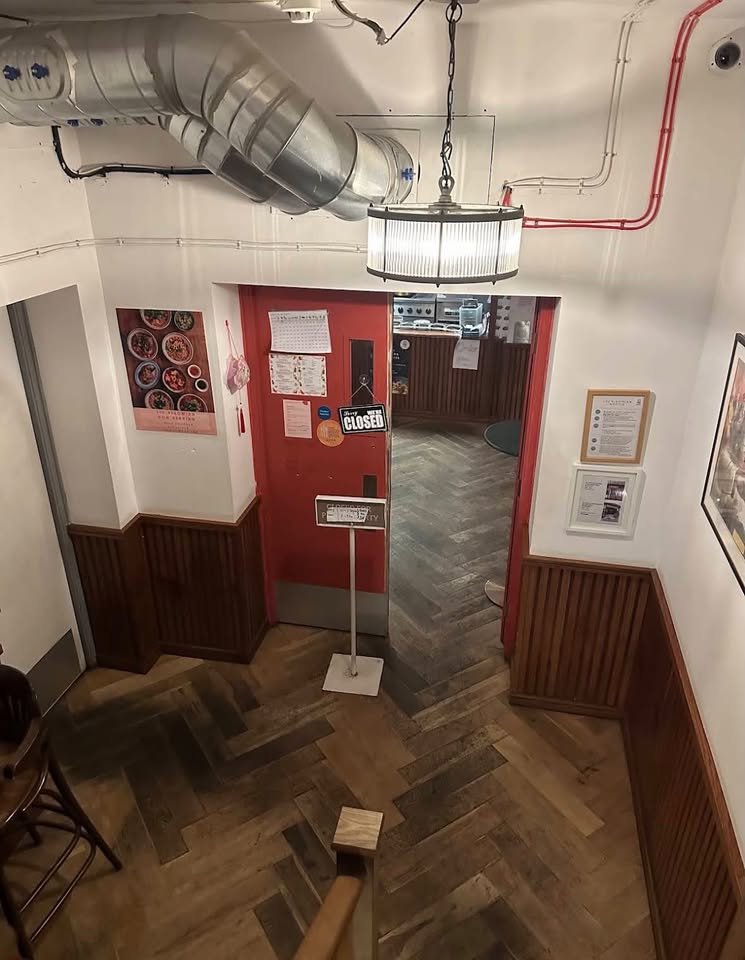
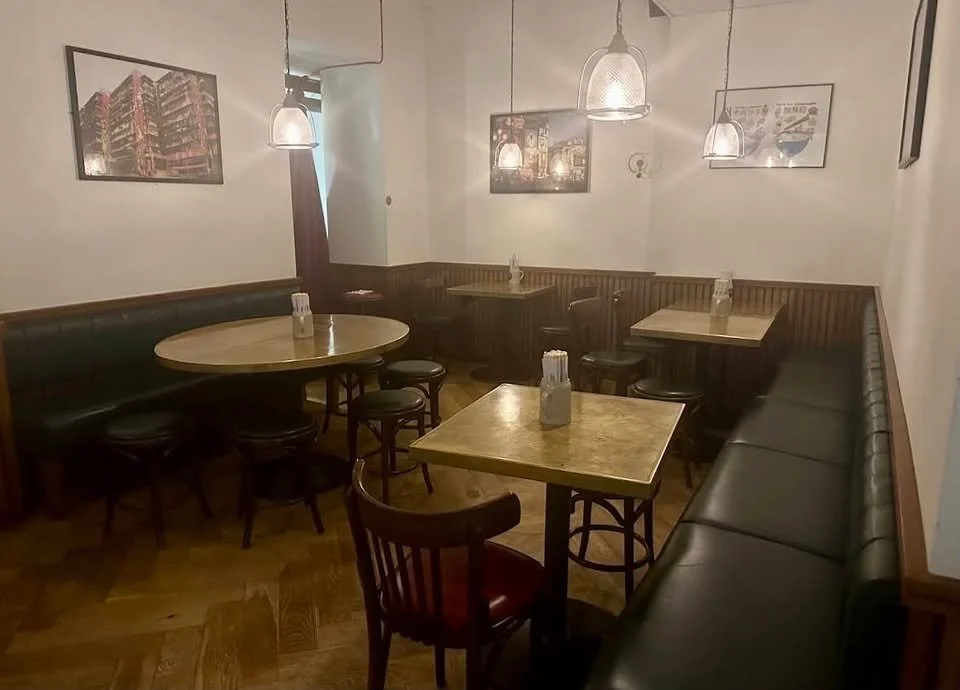
The old name, Dover Castle, is still etched into the windows. Nothing about the front tells you there’s a noodle shop inside. But past the bar, behind the restrooms, and down a narrow staircase, there it is: LIU Xiaomian, a Chongqing noodle shop living in the pub’s basement.
A poster at the counter proudly lists its address as “Basement, The Jackalope.” When I asked my server about it, she laughed. “Customers have such a hard time finding our restaurant since it’s hidden behind the restrooms of the pub above,” she told me.
The story behind it is as scrappy as the location. Founders Charlene Liu and Linda Liu, both from Chongqing, met as flatmates in London and couldn’t find the spicy noodles they grew up on, so they started selling them as a street food stall in 2017 (Lutrario, 2024). In 2019 they moved into The Jackalope’s kitchen as a pop-up that turned into a long-term residency, and only in 2024 did they open their first standalone restaurant in Soho’s Kingly Court (Restaurant Online, 2025). Their newest site, opened late last year, is inside another pub.
The Scale of the Problem
Before getting into the noodles, it’s worth knowing what’s at stake. The UK’s hospitality and food service sector throws away around a million tonnes of food every year, worth roughly £3 billion, and about 75% of it could have been eaten (Veolia, n.d.). Where that waste comes from matters even more. WRAP found that 45% of the sector’s food waste happens during preparation, 21% from spoilage, and only 34% is left on customers’ plates (WRAP, 2013). In other words, most of the problem is decided in the kitchen, long before anyone sits down.
A Short Menu and a Tiny Kitchen
That’s where LIU Xiaomian gets interesting. The menu is tight: two noodle bases, wheat or glass noodles, and a handful of toppings like minced pork, chickpeas, and spicy beef (Lutrario, 2024).
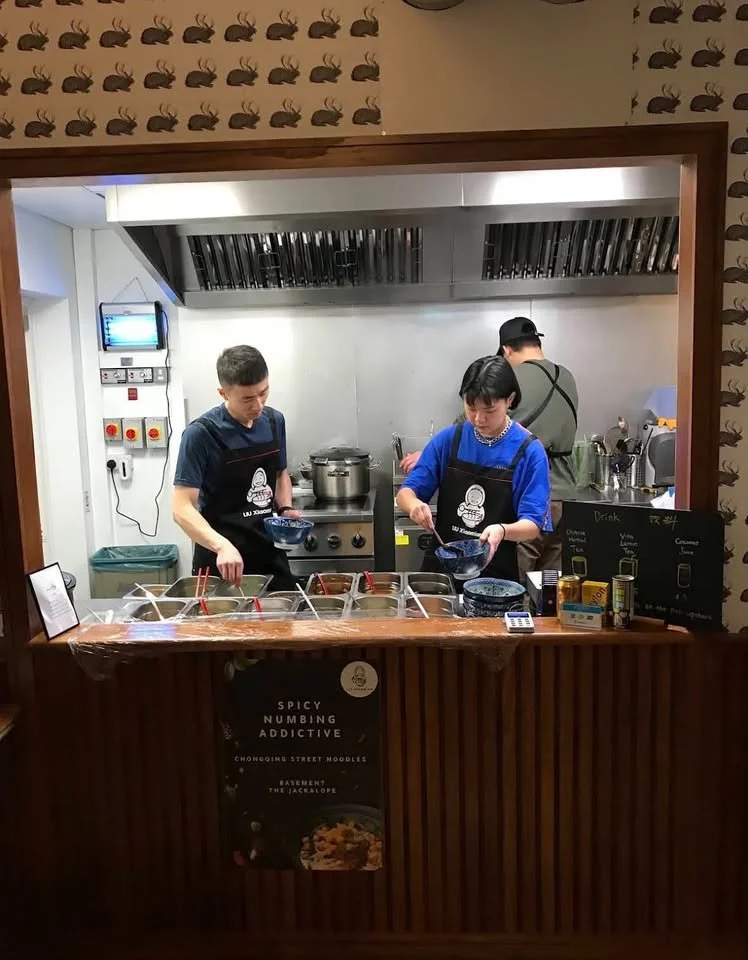
Watching the open kitchen, I saw three cooks working one counter, building every bowl from the same row of steel trays. Fewer ingredients mean less to spoil, and when every dish draws from the same components, nothing sits around waiting to be thrown out. My server put it simply: “We use every ounce of oil, soup, and seasoning up to the max.” As Linda Liu has said, their noodles “have always been about comfort, fresh ingredients, and a menu that’s accessible to everyone” (Restaurant Online, 2025).
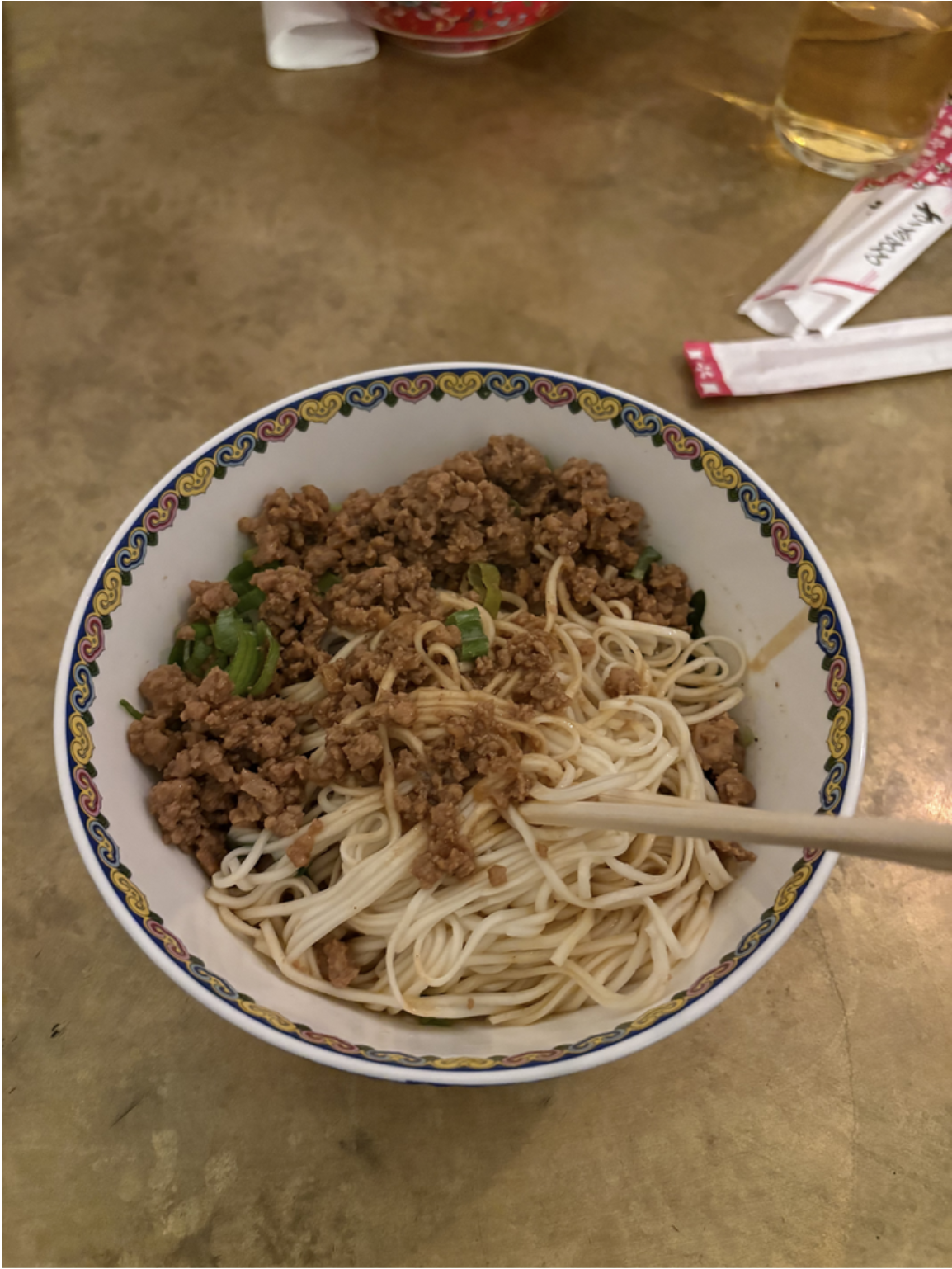
My bowl was minced pork over springy wheat noodles, scallions on top, and the sauce hiding at the bottom waiting to be mixed in. The founders say the heart of every dish is their signature chili oil, made from four kinds of chilies and more than fifteen spices (Lutrario, 2024).
With a recipe that involves so many ingredients, it makes sense that not a drop goes to waste. There’s no table service either: you queue, order at the counter, and carry your own bowl (The Good Food Guide, n.d.). Less front-of-house, less overhead, more noodles.
Renting a Basement, Not a Building
The part that impressed the business student in me most was how the waste-not mindset ties directly to the bottom line. “We don’t waste anything since London is already so expensive,” my server explained. Instead of signing a lease on a Marylebone storefront, in one of the priciest neighborhoods in the city, LIU Xiaomian shares a building that already exists. The pub gets a reason for people to come in at lunch, and the noodle shop gets a working kitchen and a built-in crowd without the cost of building a restaurant from scratch. Even the size works in their favor. “The small space is easier to clean, so we don’t need to hire additional workers,” she said. The founders only went permanent after five years of proving people would line up. Sustainability usually gets framed as solar panels and compostable cups, but there’s another kind too: not building, buying, or hiring more than you need.
So, Is Small the Greenest Model?
I’m not claiming a basement noodle shop solves the UK’s food waste problem. But LIU Xiaomian is a good reminder that some of the most sustainable choices a restaurant makes don’t come with a marketing campaign. Here, saving the planet and saving money turn out to be the same decision. A short menu, a shared space, and a kitchen that uses every last drop can do as much as any eco label. And for the record, Mom, I’m eating just fine.
References:
Lutrario, J. (2024, April 24). Sichuanese noodle bar Liu Xiaomian goes permanent. Restaurant Online. https://restaurantonline.co.uk/Article/2024/04/24/sichuanese-noodle-bar-liu-xiaomian-opens-soho-restaurant
Restaurant Online. (2025, October 13). Charlene Liu and Linda Liu to launch Liu Xiaomian residency in London’s The Strand. https://www.restaurantonline.co.uk/Article/2025/10/13/charlene-liu-and-linda-liu-to-launch-liu-xiaomian-residency-in-londons-the-strand
Server at LIU Xiaomian. Interview with Edward Zhang about food waste and operations at LIU Xiaomian [10/25/26].
The Good Food Guide. (n.d.). Liu Xiaomian Marylebone. Retrieved October 26, 2026, from https://thegoodfoodguide.co.uk/restaurant/liu-xiaomian-marylebone/id/62432
Veolia. (n.d.). Reducing food waste: Play your part. Retrieved October 26, 2026, from https://www.veolia.co.uk/node/9661
WRAP. (2013). Overview of waste in the UK hospitality and food service sector. https://www.wrap.ngo/resources/report/overview-waste-hospitality-and-food-service-sector
