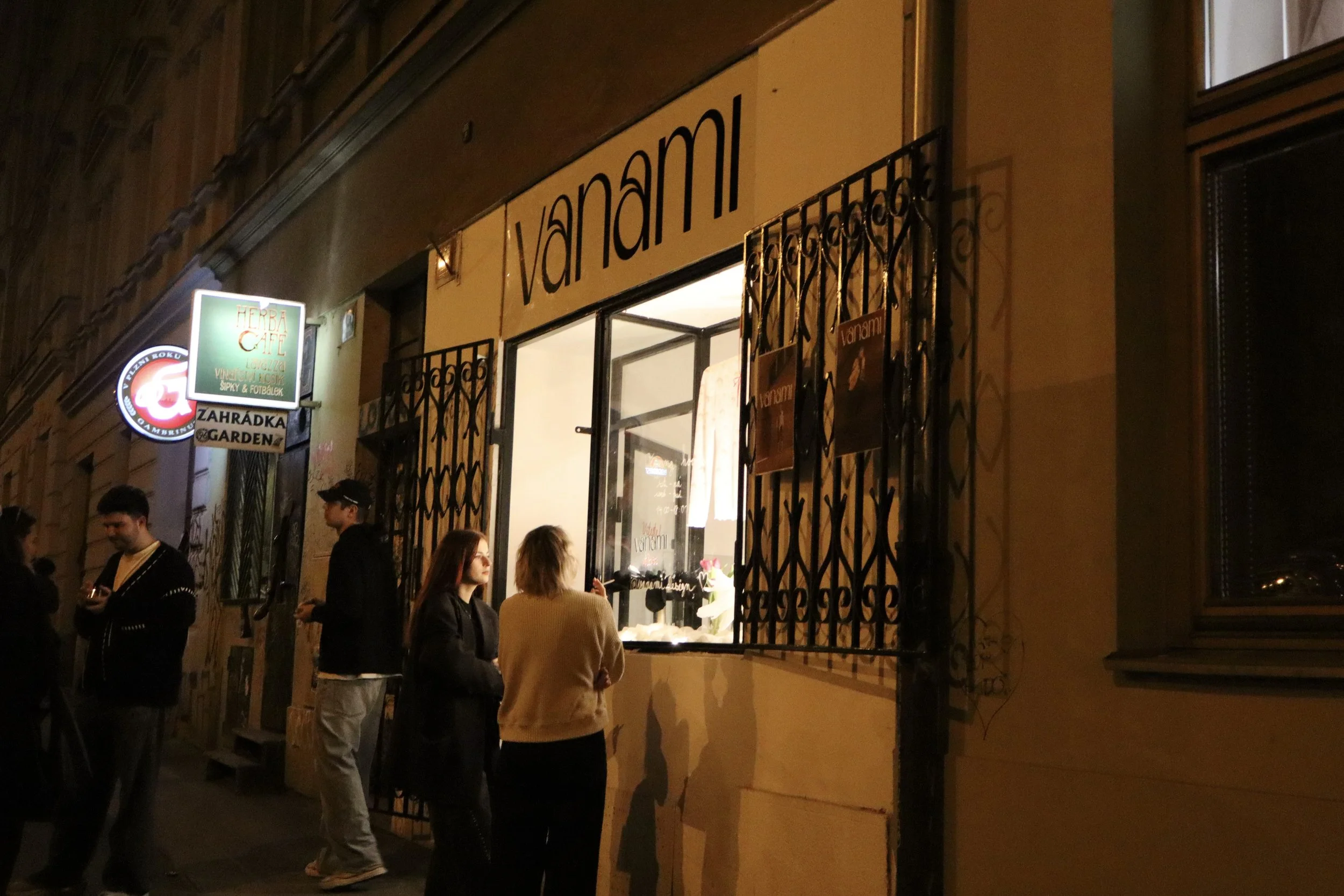

From Deadstock to Dialogue: Inside Klara Kozderková’s Vanami
By Betania Solomon (03/22/26) — Prague, CZ
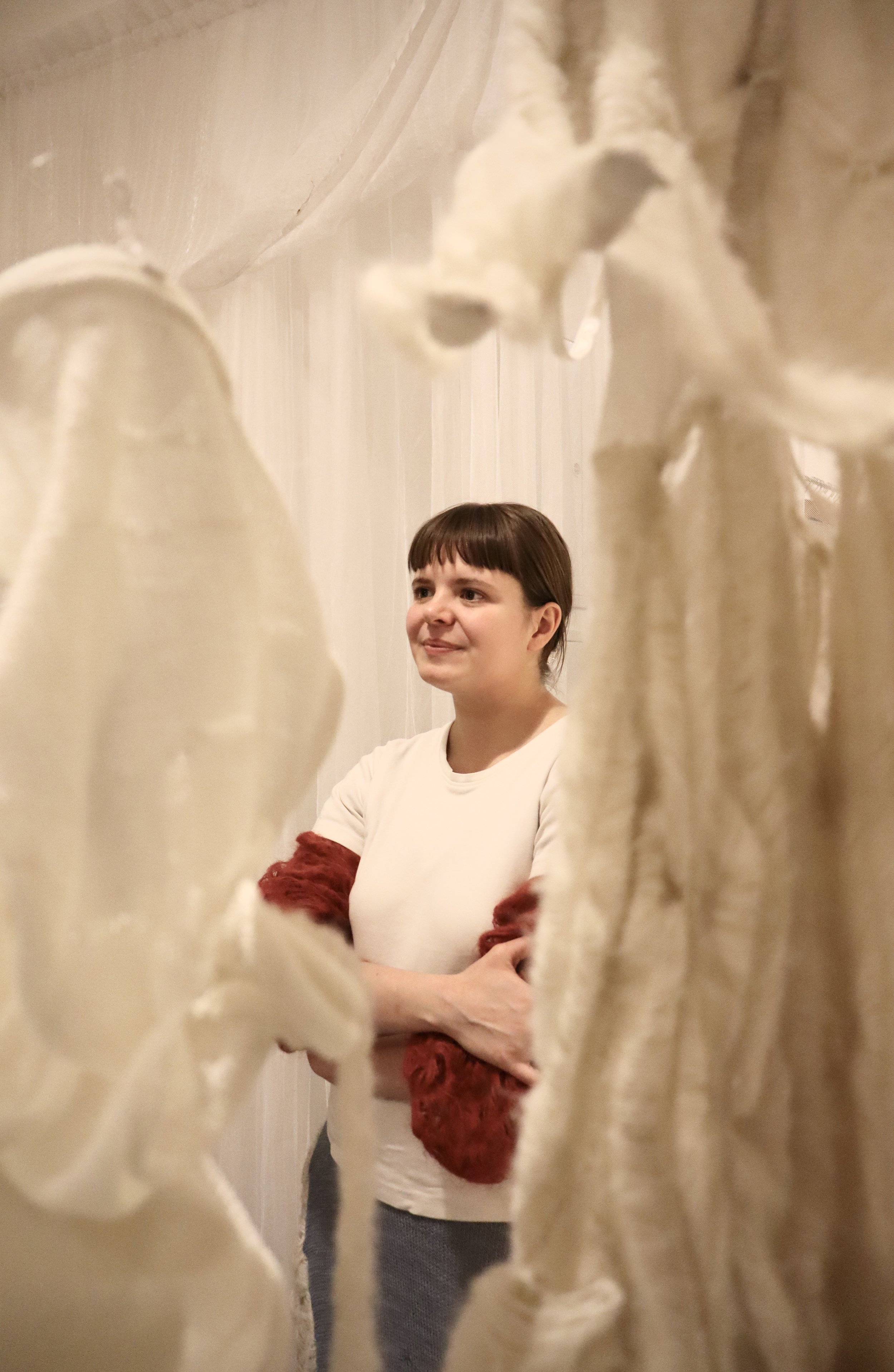
The Designer Behind Vanami
Klara Kozderková is a Czech-born and raised creative designer and store-runner of her fashion brand Vanami, which translates to “variable and made to measure,” a name she chose intentionally to reflect the versatility, comfort, and activism embedded within her designs.
During a visit to her store located just a 20-minute walk from my dorm in Prague, she explained that she grew up “learn[ing] that being a fashion designer comes at a cost of being part of one of the most pollut[ive] indust[ries] in the world.” She attended fashion school in Denmark, and made it her career goal to “focus on what’s already here… restricting [herself] from buying new fabrics.”
From the moment materials are sourced to when the pieces are displayed in her store, Klara maintains a balance between the inventiveness of fashion and the creative boundaries of recycled materials.
Embraced by the Design Community Within Prague
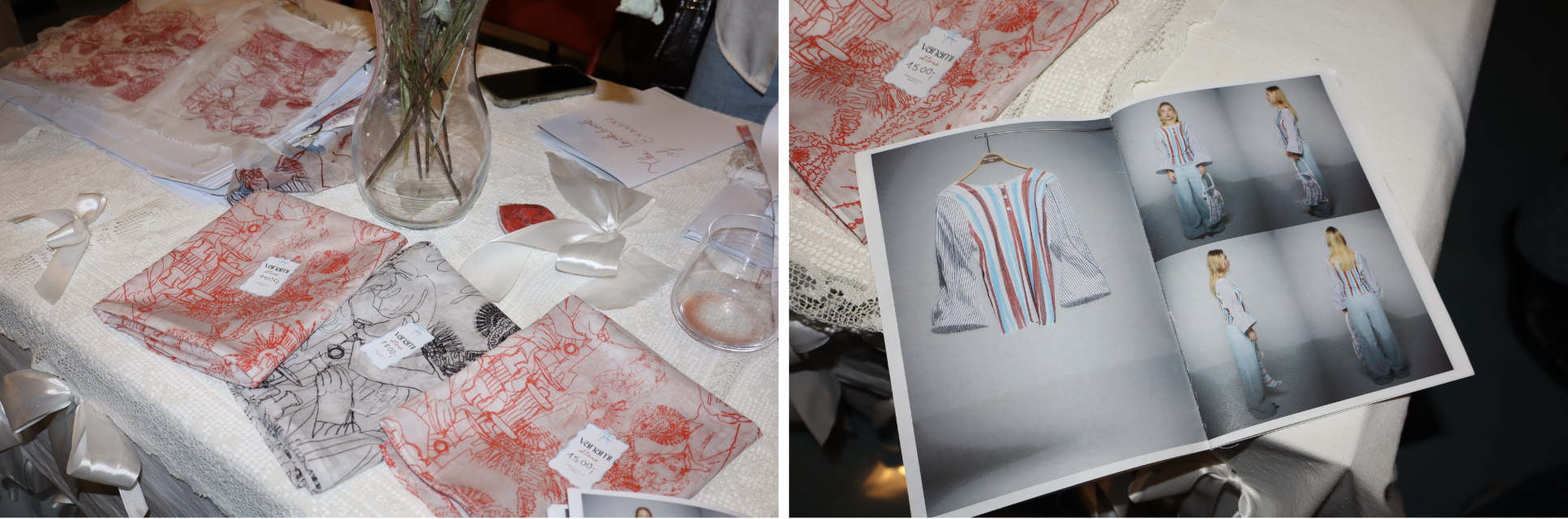
I was curious about how Klara sourced deadstock materials locally, and she shared her experience of becoming accepted into a network of eco-friendly fabric gatherers, such as Textile Mountain, which operates across the Czech Republic and Slovakia.
“There are a lot of factories that close down, but the fabrics are still lying somewhere around. Textile Mountain buy[s] fabrics from the Czech designers or, like basically anybody who has leftover material…so they can give it a second life,” she said with a content smile on her face.
Klara’s first interactions with fabric began at home around the age of five or six, when she spent time with her grandmother learning the basics of sewing, a practice born of creativity shaped by Czech history and over forty years of Communist rule.
Reflecting on her family’s history, Klara explained, “I think [the Communist era] had an influence because [my parents] valued the possibility of making your own decisions more because they were very repressed.”
Her parents, both musicians, spent their young adult lives taking risks in a society where the expression of vibrant personality and art was heavily discouraged, and in some cases even criminalized. According to an article on Radio Prague International, something as simple as an alternative hairstyle, such as boys having long hair, could lead to arrest (Willoughby).
It makes sense, then, that in a country where artistic ideas were often expressed through practical skills, and those such as sewing and resourcefulness were once necessities, there remains a strong culture of sharing and repurposing materials passed down to the next generation. Through a network of Czech designers and textile gatherers, Klara participates in a fashion ecosystem that prioritizes extending the life of existing textiles.
Clothes for Communication
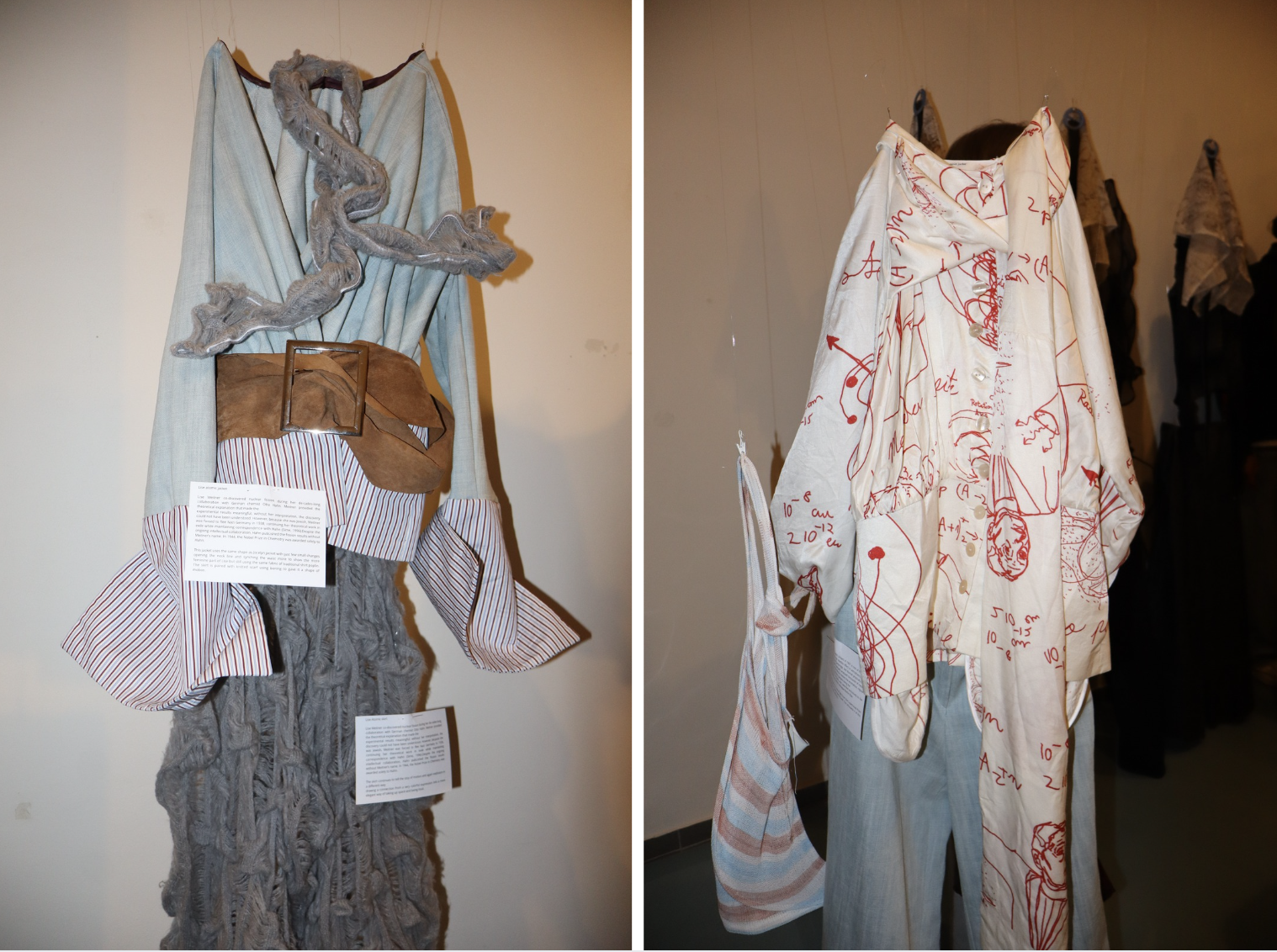
The next day, I returned to the store for a pop-up showcase of her collection, The Erasure. In this collection, Klara’s designs explored the historical ignorance and erasure of female contributors in fields such as science, culture, and innovation. A small community gathered that evening, creating a warm atmosphere where people socialized, examined the pieces she had created, and listened closely during a Q&A session about her design process.
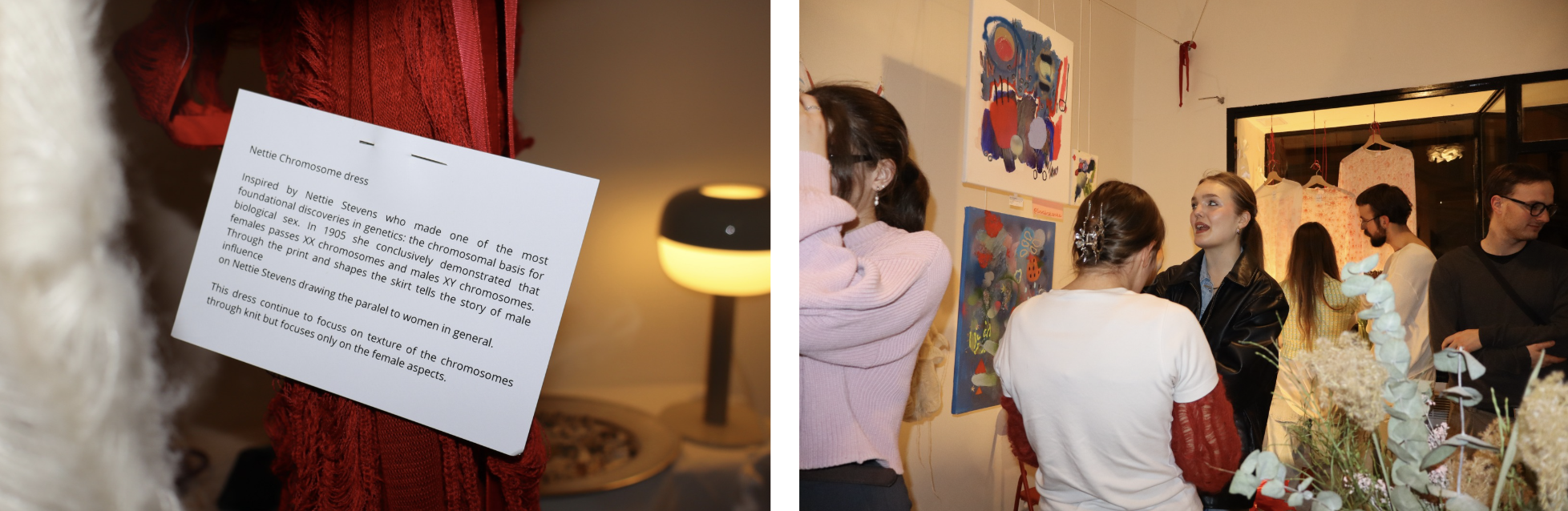
For Klara, clothing is more than aesthetic expression; it is a form of communication and protest, not only through its physical and material origins but also through its symbolic meaning. As a feminist and activist, she sees fashion as a medium through which ideas can be expressed, and conversations can begin about women’s equality and the conditions of human labor. Through her work as a designer, she aims to challenge and reshape the fashion industry from within.