

By Alessandra Rosenthal (11/20/26) — London, UK
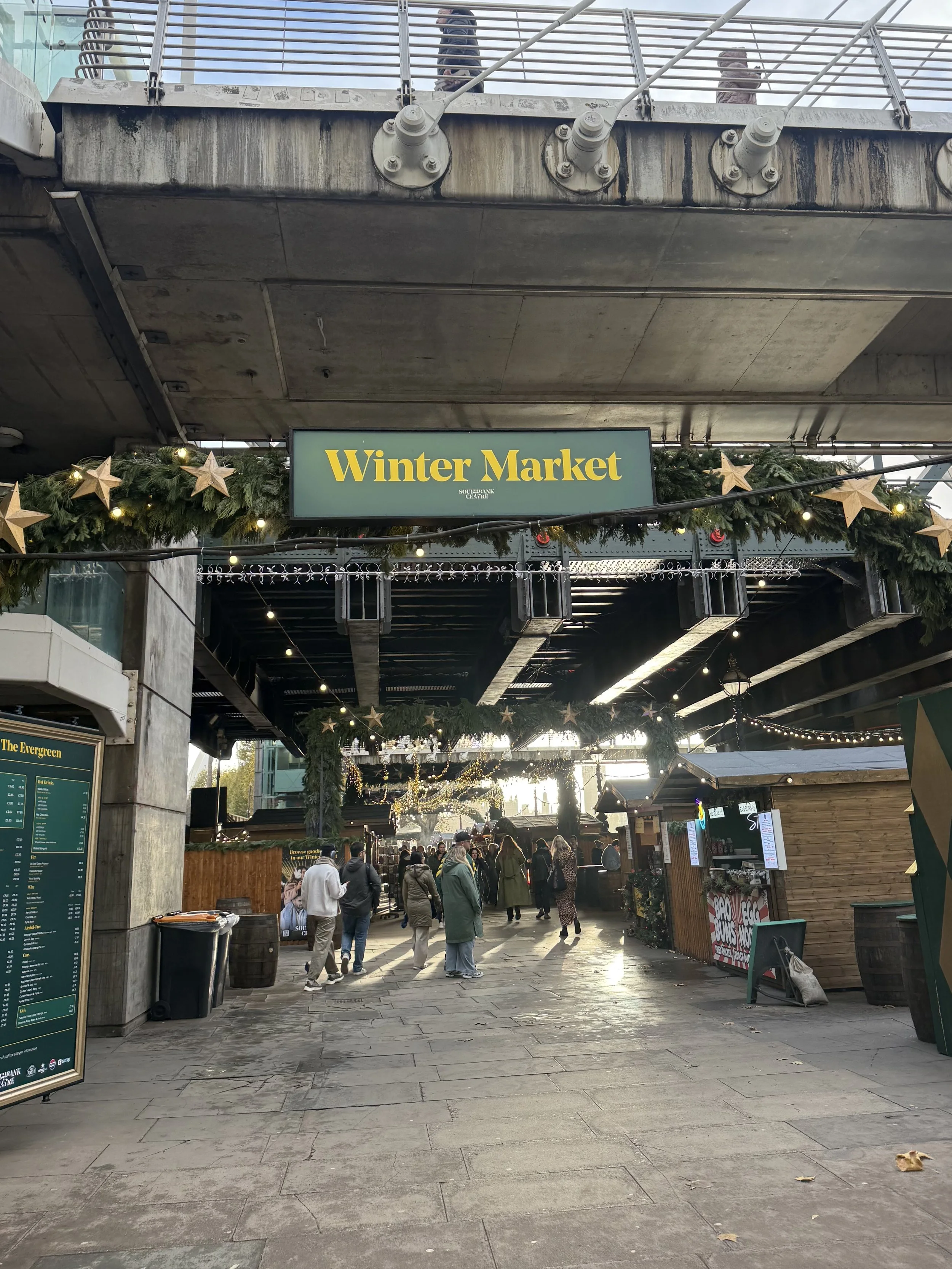
Europe is famous for its Christmas markets, and London is no exception. Between now and early January, you will find them scattered across the city—Leicester Square, Hyde Park, Covent Garden, and then the one I went to, strung along the river at Southbank. The string lights and festive decorations were up, and the smell of wine and something frying led me to walk through the row of wooden huts.
One store in particular caught my eye.
I’d been on the hunt for a winter scarf, and Pincho Poncho had many, along with sweaters, hats, and mittens. I looked through the colorful garments and picked a soft purple one. I then asked the woman running the stall if she had a few minutes to chat.

She told me she’s been running stalls at the winter markets for the past five years. The hours are long—up to 11 a day—but she says that’s the point. Long hours mean more sales, but what she talked about more was the people. Meeting all kinds of them, and making loads of friends every season. “It's kind of like an easy job, in a way.” She told me, smiling.
The stock is imported from Peru for the three-month season, with deliveries every couple of weeks, and whatever remains sits in boxes behind the stall. “Sometimes what you see is what I have.” A normal store can reorder if stock gets low, but she can’t.
It isn’t only winter work, either. Her company also sells at festivals all summer, and in between, her manager, who owns the business, runs a market stall at Spitalfields Market.
I asked what the hardest part of the short winter season is, expecting an answer about competition or the weather. “Taking care of yourself properly,” she said. “Like, making sure you eat. It's hard to do all of that when you're here for 11 hours a day. It's a lot.” It was mid-afternoon at this point, and she’d been there since early morning.
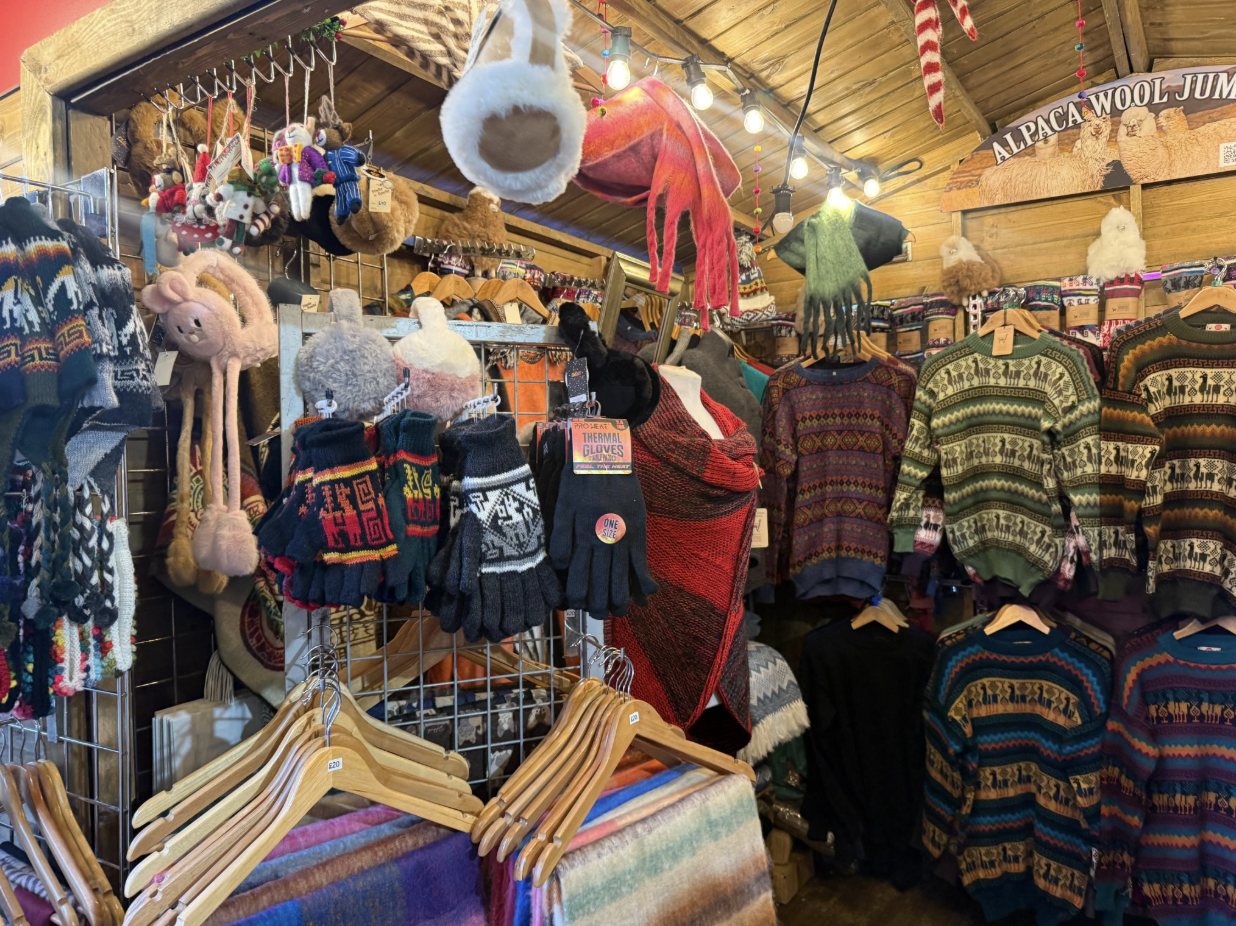
I asked if there's anything people assume about the markets or market trading that isn't true. “That people are trying to scam, and I think there are people like that here” she admitted, “but a lot of the time it's just completely honest businesses trying to make it.” That was about to make a lot more sense as I asked to pay for the scarf I had picked out.
She asked if a credit card was okay, not a typical question—I said yes, but asked if they took cash or not. She told me that markets have gotten rid of cash payments, and also take 30% commission on sales, making life increasingly difficult for market sellers, especially given all the other costs like rent, electricity, and credit card fees.
When you think about sustainability at a Christmas market, it might be the food waste, packaging, or decorations coming to mind. But there’s another question: whether a small business can survive a two-month window without a third of its revenue.
References
Southbank Centre Winter Market. https://www.southbankcentre.co.uk/activity/winter-market/
