

A Coconut a Day Keeps the Plastic Away
By Sophie Wampler (04/12/26) — Accra, GH
The 15-minute walk from the NYU dorm to the NYU academic center can feel like 15 years. You pass by street vendors, scrap workers lounging, and many women with delicious goods stored in baskets on their heads. But what makes it feel like an endless walk is the 90-degree weather.
After 2 months in Ghana, I thought I would be used to the heat. But still, I show up to class drenched in sweat and thirsty. I try to bring my trusted Hydro Flask most places, but I often struggle to find clean water sources to fill it. Instead of turning toward the mass of plastic water bottles being sold, I have turned to the Ghanaian favorite, coconut wheelbarrows. On almost any street in Ghana, you’ll come across vendors, typically men, pushing wheelbarrows overflowing with coconuts or selling them from roadside stands.
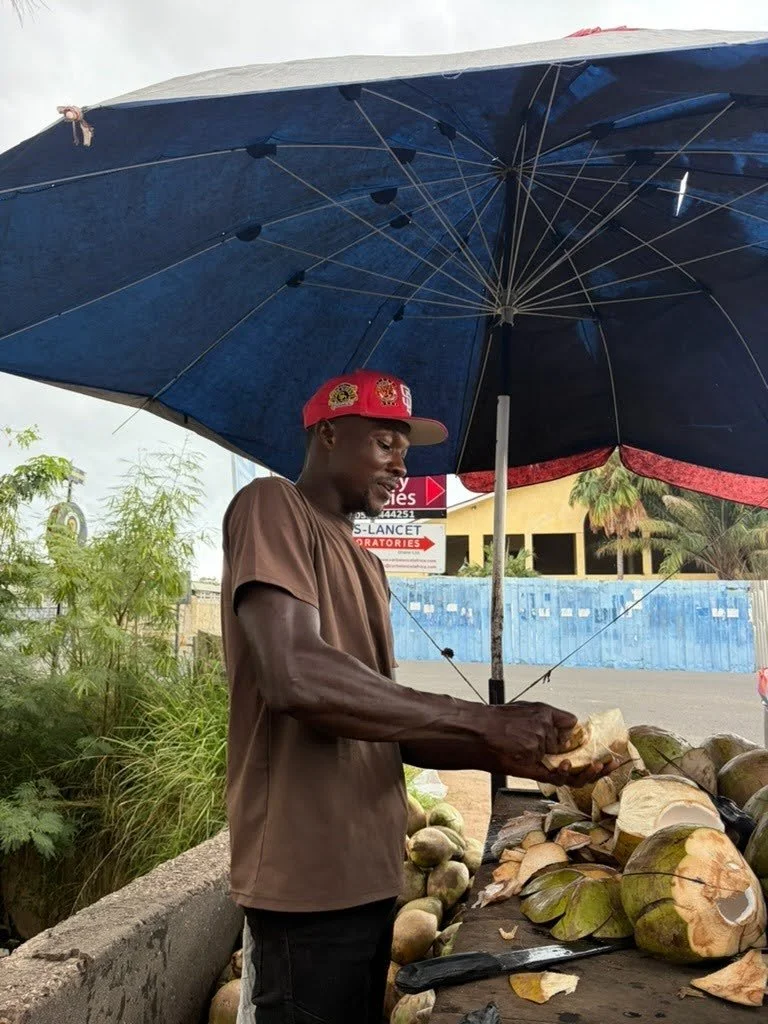
(Kofi scraping coconut fruit)
Today I visited my favorite seller, Kofi. Coconuts typically cost 7-10 cedis. Or 70 cents to $1 dollar. Kofi charges 10 cedis. I hand him the cash, only cash payments for coconuts, and Kofi begins cutting. He uses a machete to slice off the top. The coconuts are so fresh and delicious. I immediately feel rehydrated. After I finish drinking the coconut I hand the coconut back for the seller to cut fully open. They scrape out the insides and hand you the fruit inside. The coconut fruit is slimy, almost jelly-like. I always tell Kofi “no thank you” to the coconut fruit - it’s not my favorite.
Kofi is humble, but he is one of Ghana’s top coconut sellers. He has a stand on a busy corner where people walk, drive, and motorcycle up to to buy their daily coconut. Drive-thru coconuts! Kofi told me on average he sells “300 coconuts a day,” but he says most sellers “sell 50-200 in a day.” Kofi comments, “I am very blessed that I sell this much.” Every morning, Kofi picks up his coconuts from a depot near his house. The coconuts are taken from trees mainly in the Western region, but throughout Ghana, and brought to city centers.
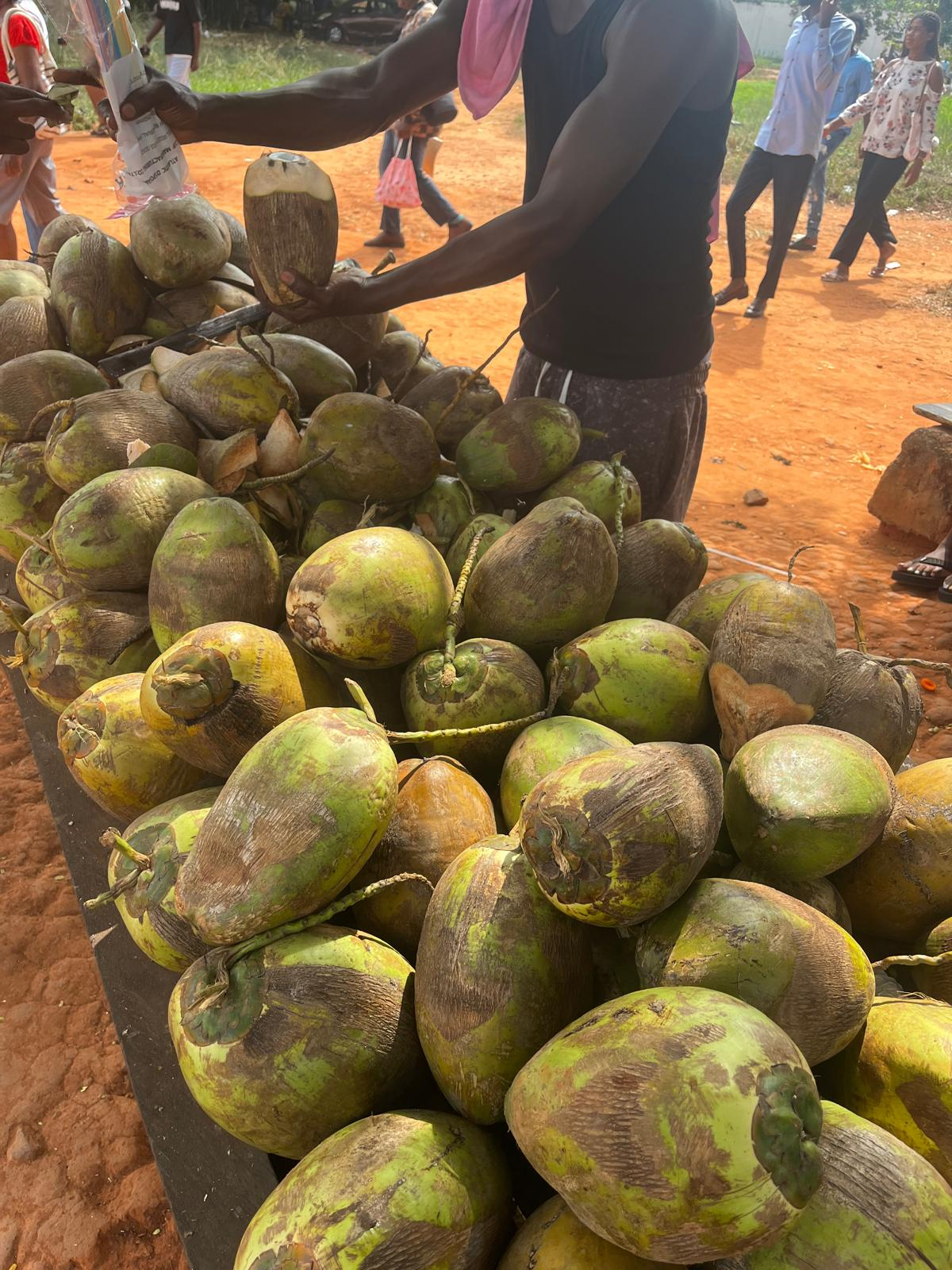
As Kofi and I talk with my coconut in hand, I realize his impact on the environment. Ghanians normally drink water out of plastic bags or plastic water bottles. These plastic items are, after one use, discarded into gutters that clog drainage systems. According to the United Nations Development Programme (UNDP), “In Ghana, only 5% of the 1.1 million tons of plastic waste generated annually is recycled,” leaving the vast majority to accumulate in the environment. Standing beside Kofi, it becomes clear that his coconuts offer a quiet but powerful alternative to this growing crisis. Coconuts are naturally packaged, biodegradable, and waste-free. These coconuts travel from the Western Region in their own protective, compostable husks and require zero factory processing.
When I finish a drink from Kofi, there is no plastic cap to lose. The "bottle" is 100% biodegradable, returning to the earth as organic waste rather than sitting in a landfill for centuries. In a world obsessed with "innovative" green tech, sometimes the most effective way to combat plastic usage is simply to return to the wheelbarrow.
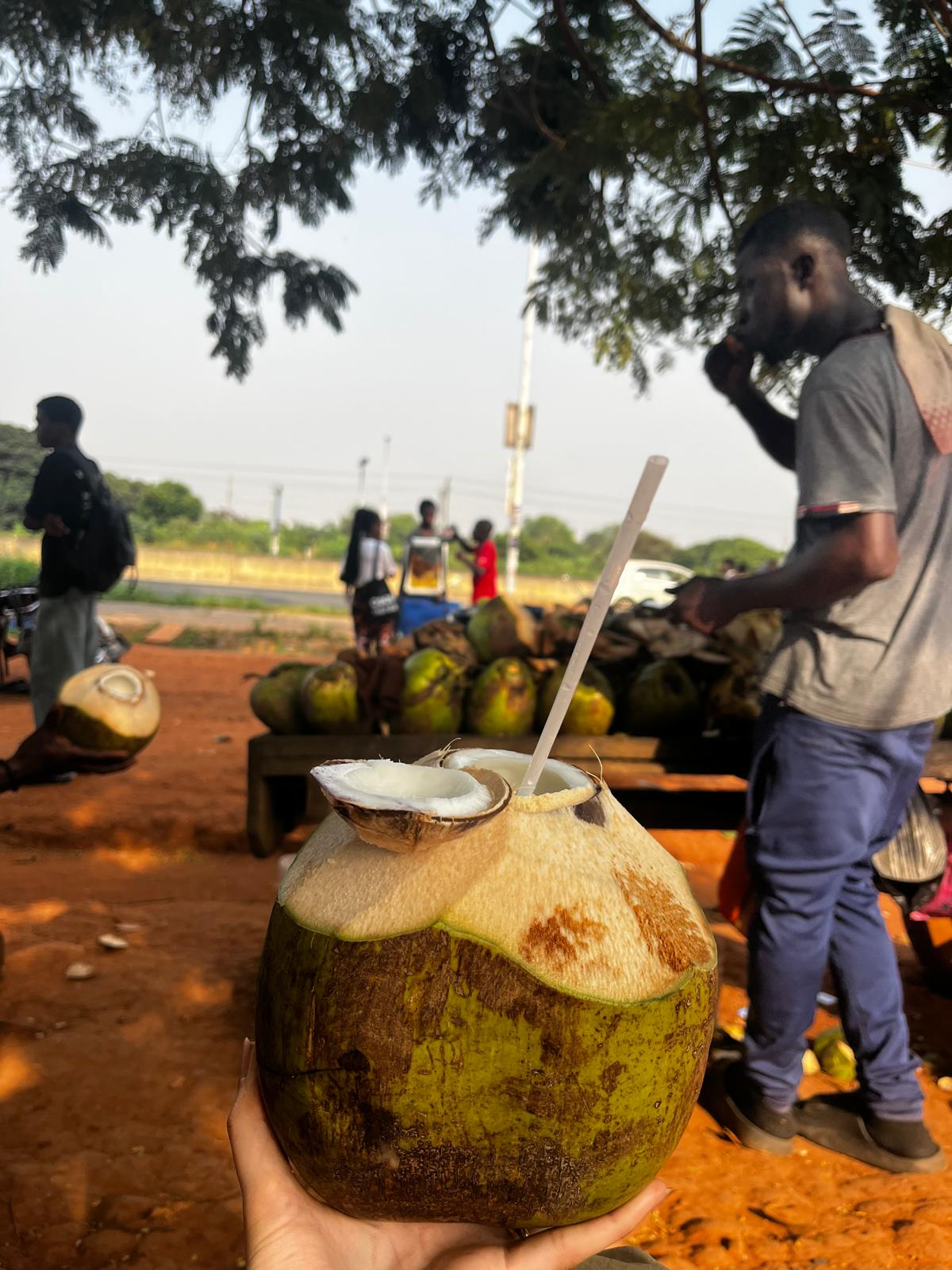
Keep on sipping!
Works Cited
Anie, Allen Joseph, and Yaw Odoom. An Experiment by UNDP Accelerator Lab in Ghana Upstream Approaches to Reducing the Generation of Plastic Waste in Ghana. 2022.
