

By John Savvides (11/13/26) — London, UK
Before Amsterdam, I never knew how a city could be so thoughtfully designed for its citizens. That may sound silly coming from someone who studies in New York and London, but neither city’s layout even compares to that of Amsterdam.
It is truly designed for a connected community. I walked on sidewalks bigger than the roads, and almost every building is a hybrid of indoor and outdoor. The locals were also nothing but friendly. However, nothing showed me how well the public gets along more than the farmers' markets.
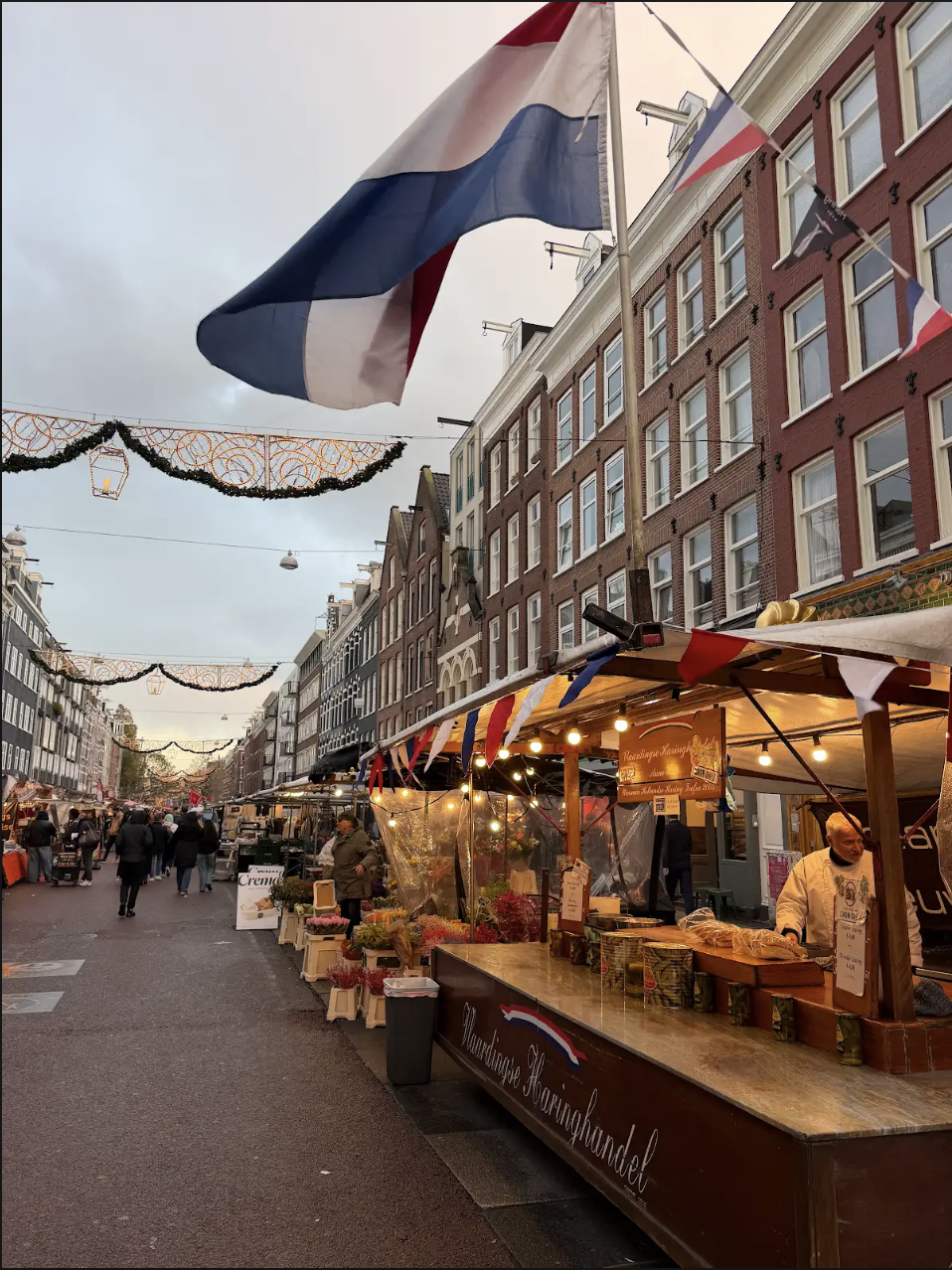
I randomly stumbled upon Albert Cuyp Markt on my trip and was amazed by how packed it was. The entire street was lined on both sides with shops and tents filled to the brim with people bumping shoulders and talking as if they’ve been lifelong friends. What I found extremely odd was the fact that the market was surrounded by grocery stores and that nobody was buying from them. Going into one of these stores, I found that their prices on produce and sweets were a lot cheaper than the market booths.
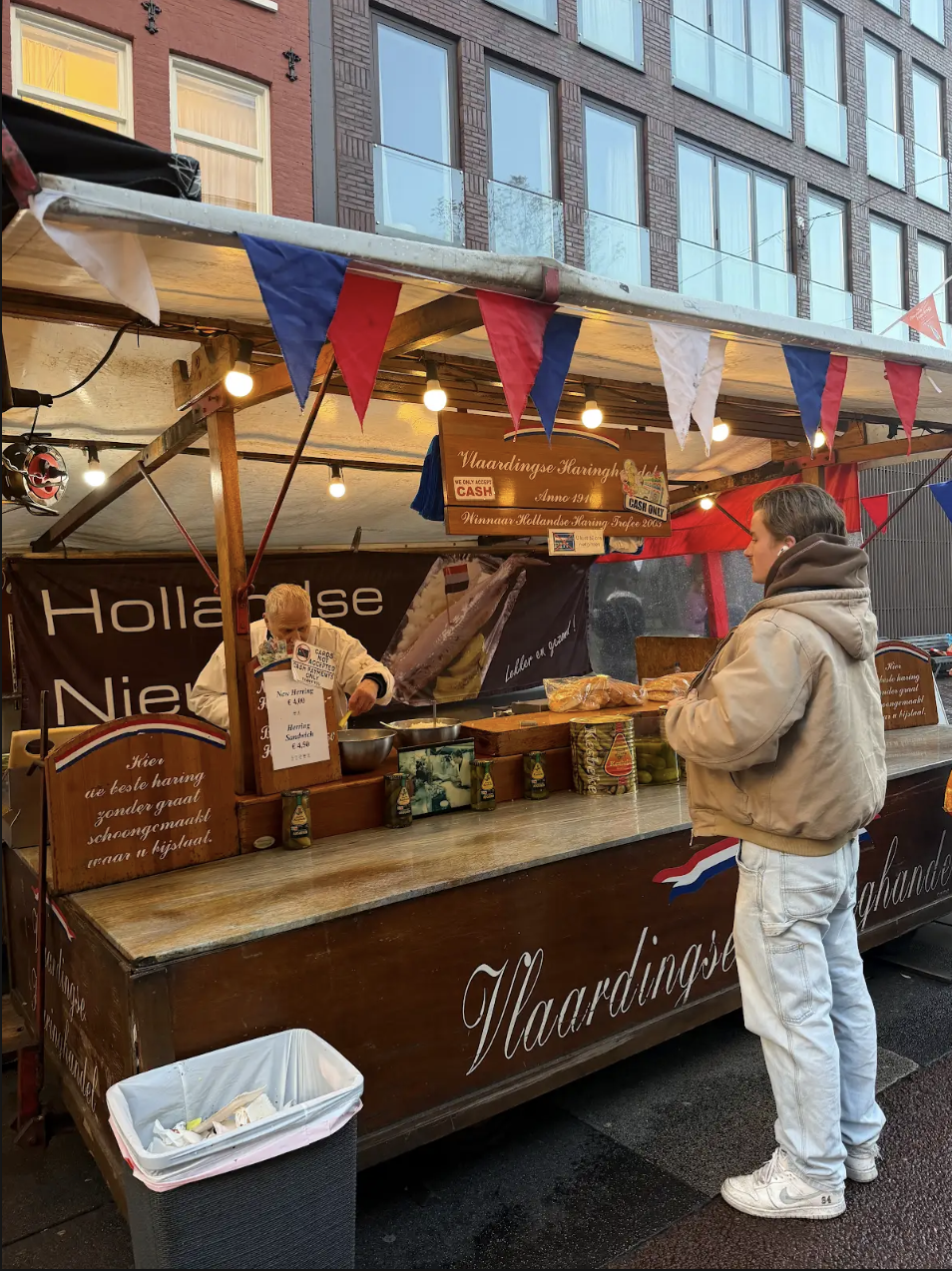
This raised my question: how are farmers' markets sustainable despite being surrounded by corporations that can undercut their prices? To find out, I interviewed Puk, who runs Vlaardingse Haringhandel, a stall that only sells one item: herring, where a fillet costs €4.
At Jumbo, a two-pack of high-quality Hollandse Nieuwe herring goes for €2.99, about €1.50 each (Supermarktscanner). Puk charges more than two and a half times that, and people still line up to buy his fish over store-bought.
To start, I wanted to know how long Puk has been beating out the grocery stores. I asked him how long he’d been running his booth for, to which he responded, “I’ve been doing this for too long; it’ll be 60 years next summer.”
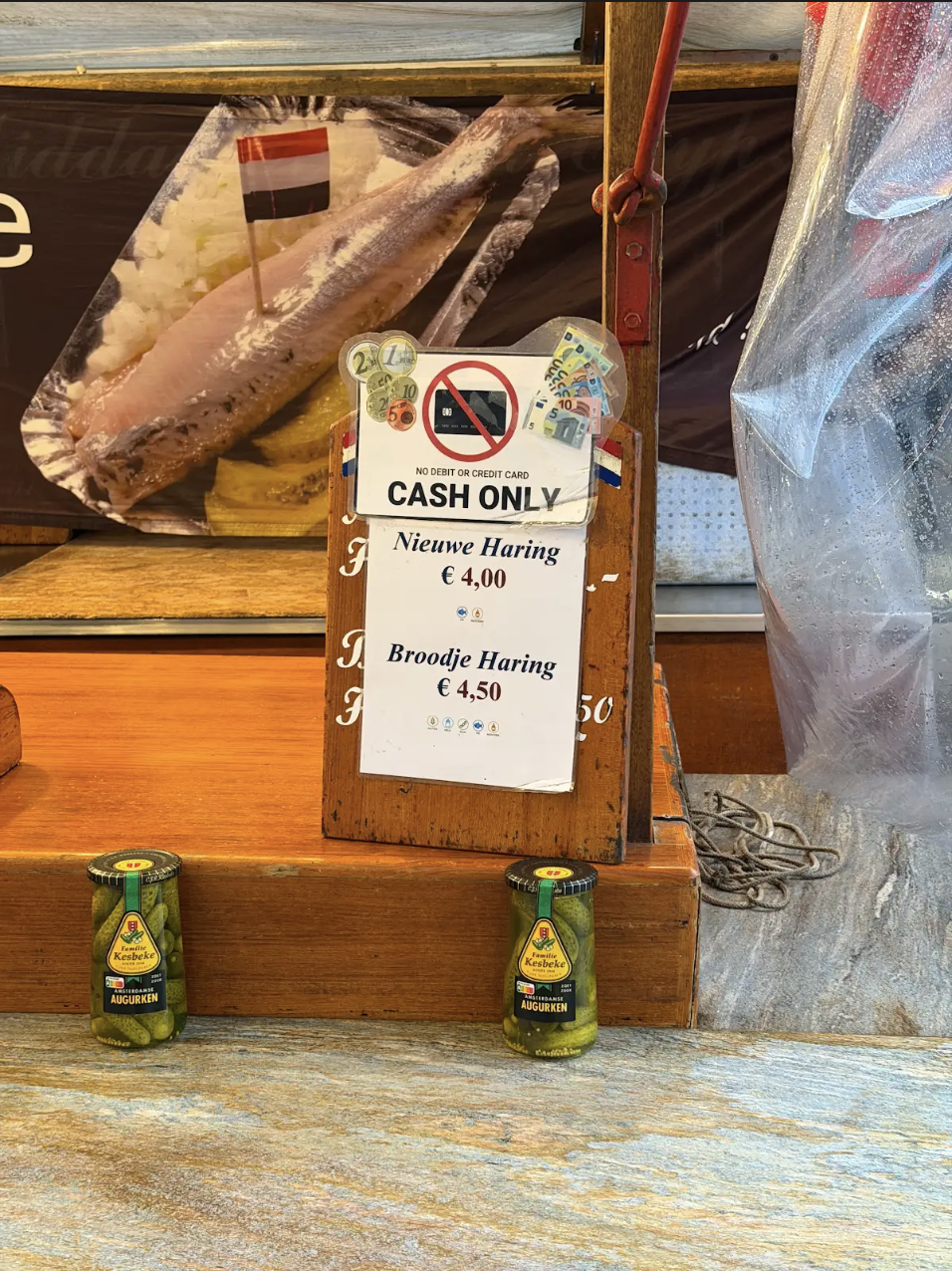
To stay on the topic of current times, I asked about his “cash only” sign, pointing out how it could deter more customers. He simply said, “Cash only. Cash is easier, and the banks charge too much of a fee at the end of the month. It can even be €200, and you’re crazy to pay that.” I was expecting him to say something along the lines of “That's how it’s always been done,” but his answer makes a lot of sense. He can’t tank card provider fees the way a big corporation could, so he found a solution that not only avoids fees but also gives customers that old-timey connection to his booth.
To end the interview, I asked what he thought about the lack of interaction in modern shopping. Puk replied in an annoyed tone, “You know, before, you would go to the butcher for meat and the baker for bread; it was traditional. Now, with these big stores, everyone just puts everything in the basket and forgets it; you’re done.” I believe he subconsciously realizes that shopping is meant to be a personal experience, and that’s what has led him to run a 60-year-long operation in spite of corporate threats. One study found that talking with vendors about seasonal products is a significant, positive influence on how much people spend at farmers' markets (Hunt).
The secret to sustaining local markets? Puk has it figured out: giving customers a personal experience is exactly what keeps them paying his €4!
