

By Lauren Lee (11/08/26) — London, UK
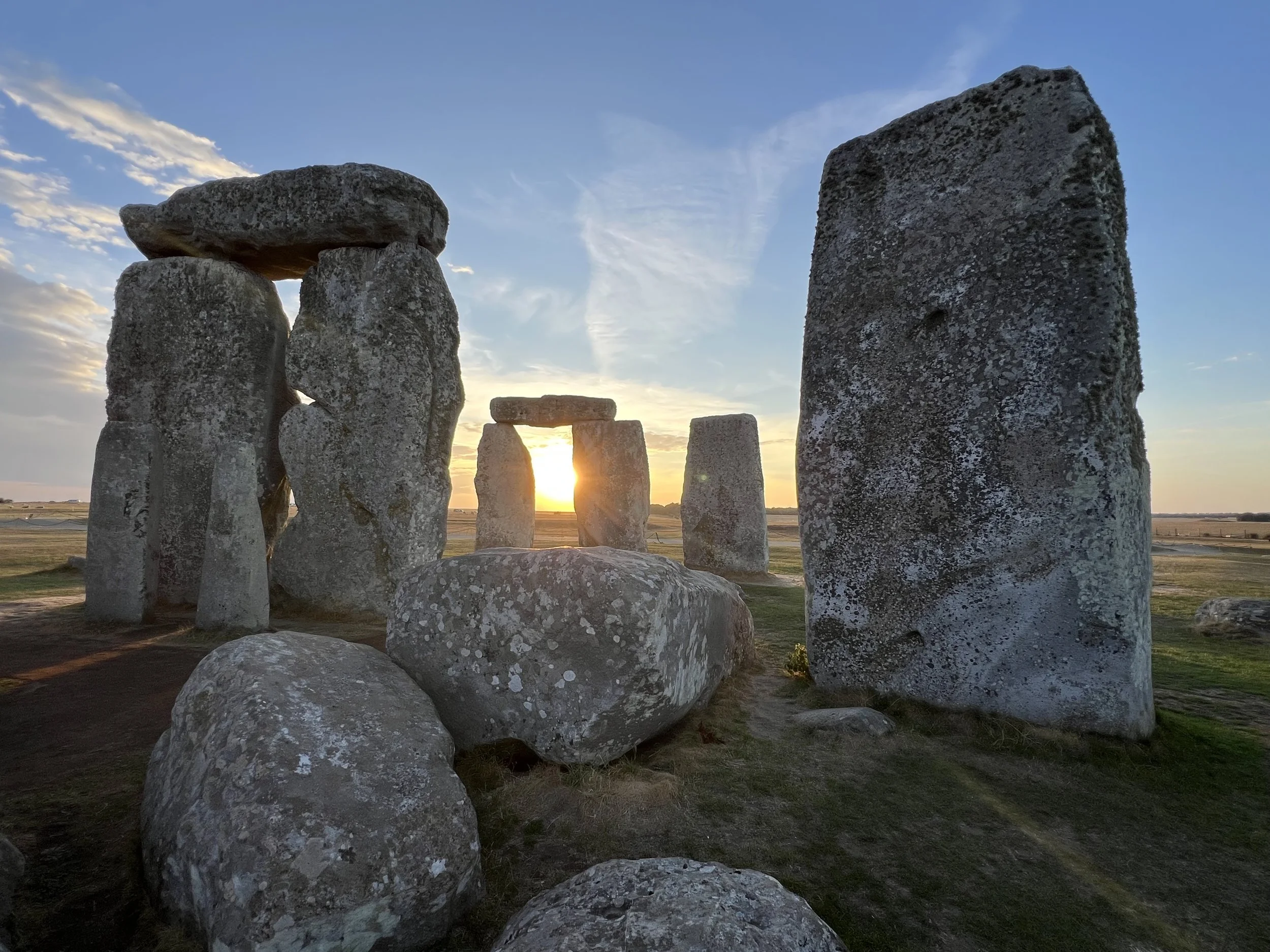
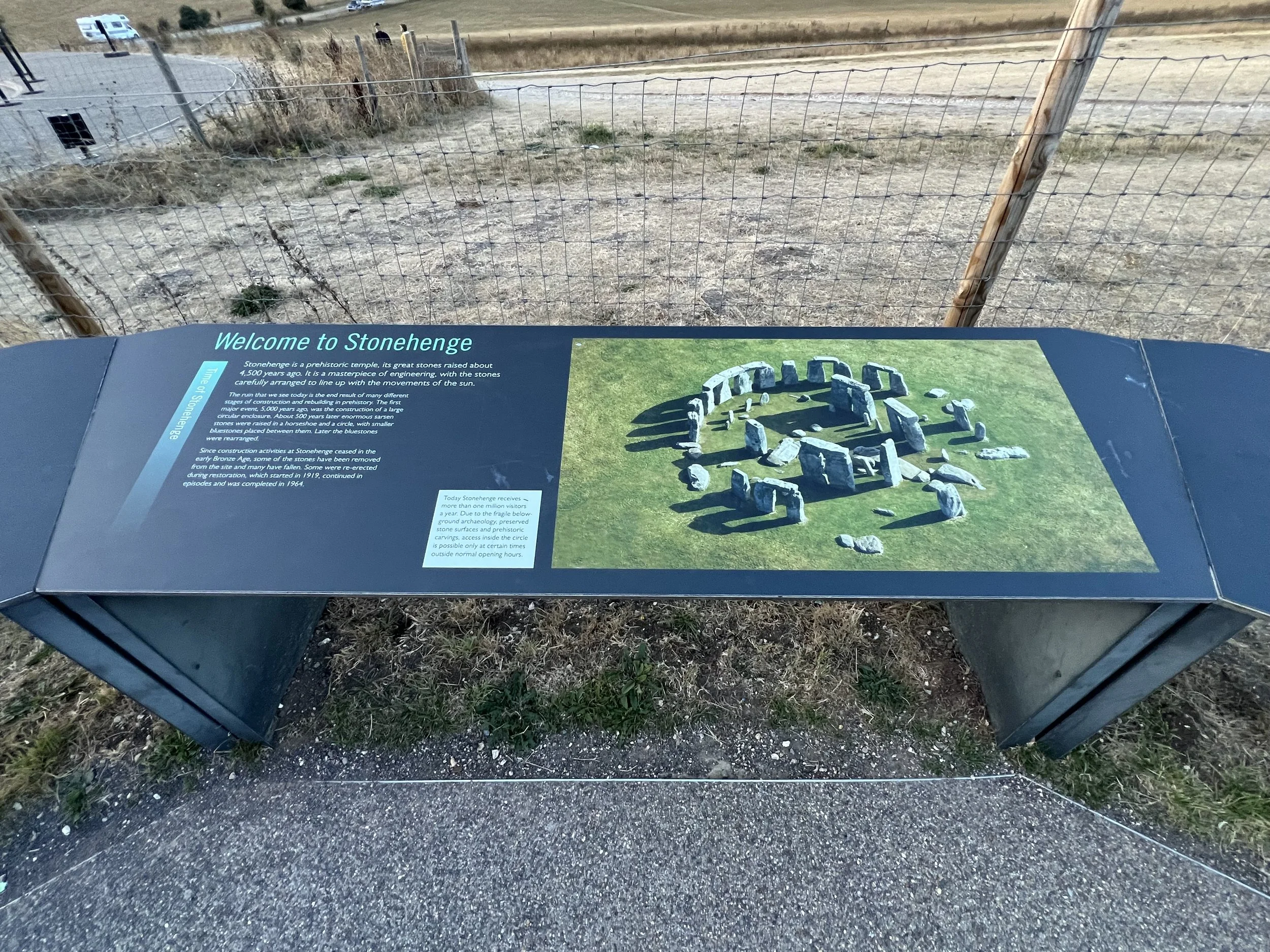
Every year, over a million visitors step into the lives of the Neolithic people at Stonehenge. On Salisbury Plain, just two hours from London, Neolithic farmers built this monument around 4,500 years ago. Thanks to English Heritage's care and conservation, the massive stone circle still stands today.
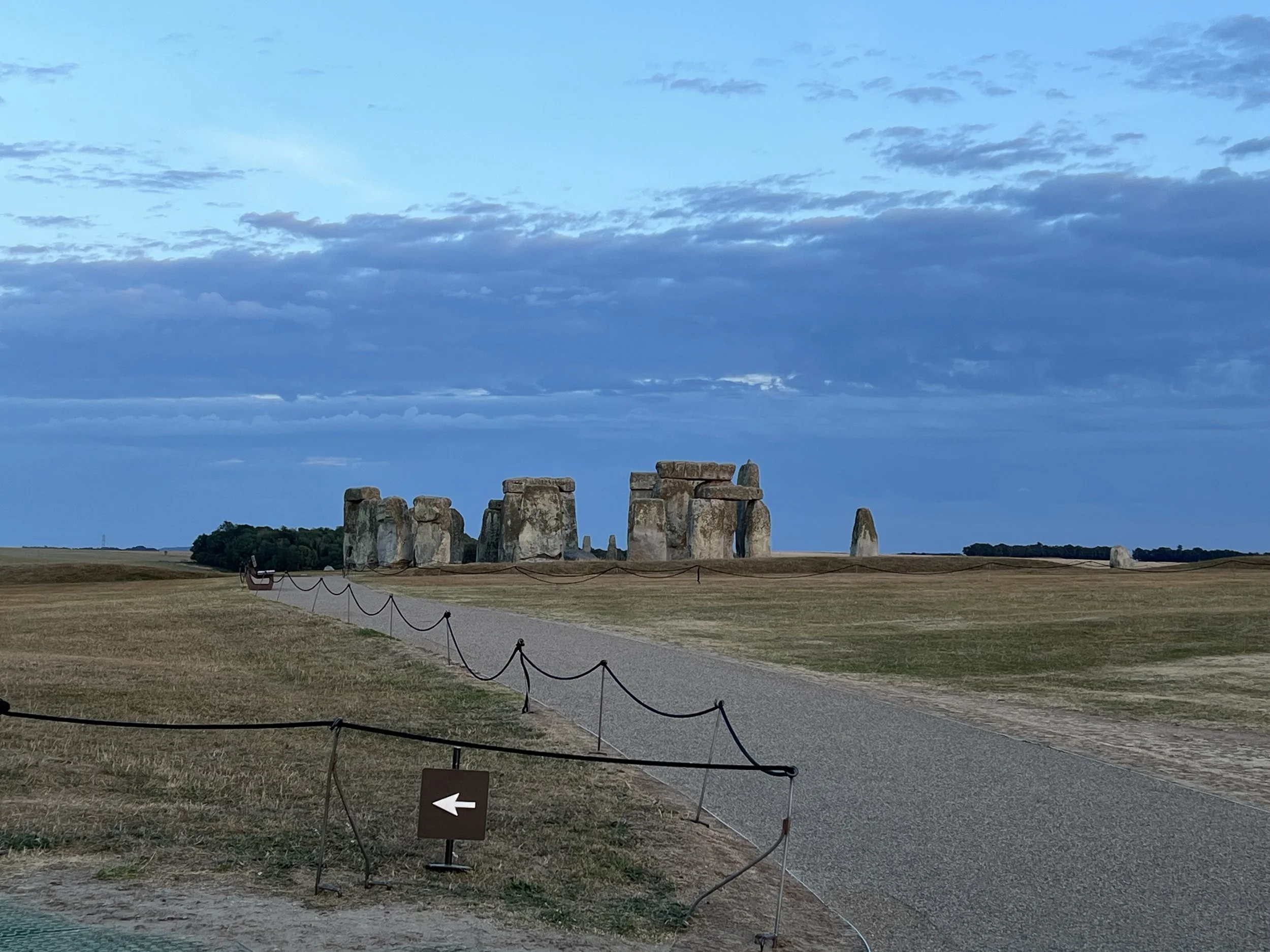
Visiting this ancient wonder in England was one of my first stops when I arrived in the United Kingdom. The bus followed the former A344 road, which English Heritage permanently closed in June 2013 to protect and restore the monument’s prehistoric landscape. As part of the £27 million transport project, Stonehenge was reconnected to The Avenue. This ceremonial route once welcomed the Neolithic people to the circle and still welcomes visitors today (Morris, 2012).
English Heritage has also taken steps to preserve the stonework by replacing the decades-old concrete with lime mortar. As it hardens, lime mortar absorbs carbon dioxide and can produce fewer carbon emissions than concrete. Its permeability allows moisture to escape more easily, helping to maintain the structural integrity of the stones (English Heritage, 2021).
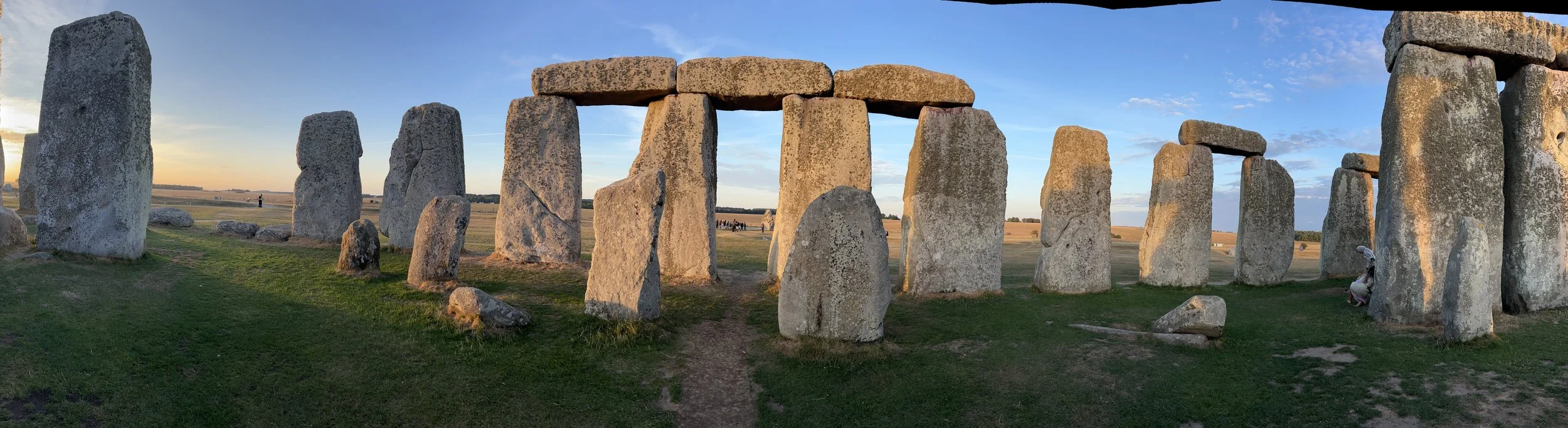
As I stepped inside the Circle, I found myself surrounded by five towering trilithons, the tallest of which stood an impressive 7 meters high. Each trilithon consisted of two vertical stones supporting a third horizontal stone, known as a lintel. Together, they formed the iconic horseshoe at the center of a giant ring of 30 vertical stones and 30 horizontal lintels.
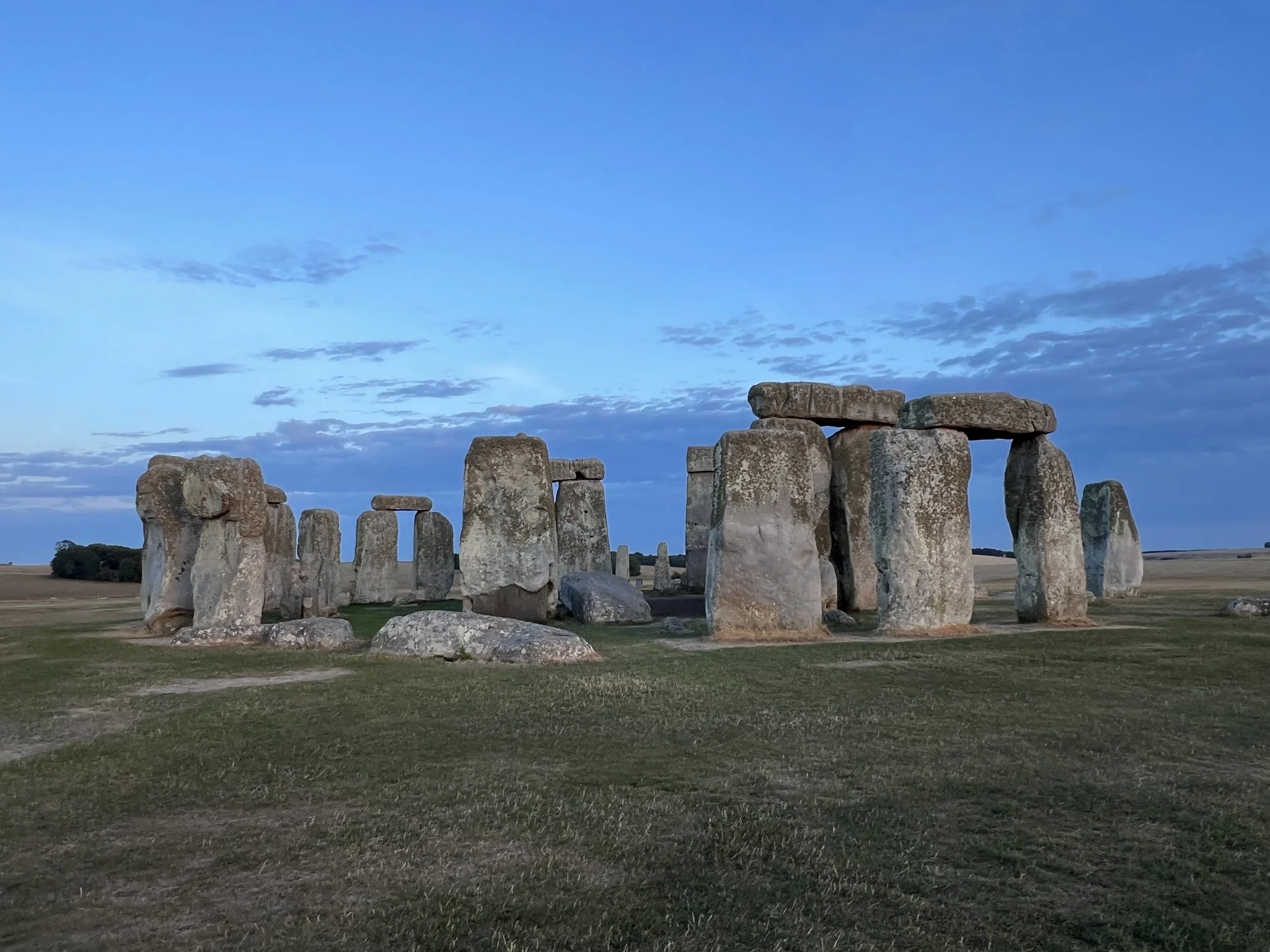
My tour guide, Sharon, shared that "the stones face northeast to align with the Sun at specific times of the year, marking the beginning of a new season." This insight sparked my curiosity about the ingenuity of the Neolithic people and how they understood the natural world: “How did they use the Sun to tell time?”
She went on to explain that “they observed that the Sun would rise and set at different places, appearing higher in the sky during the summer and lower during the winter.” The summer solstice celebrated light, growth, and vitality, reflecting the importance of changing seasons for Neolithic farming communities. In contrast, the winter solstice represented the return of light and hope during the year's darkest time.
Sharon revealed that “On September 21, 1915, Sir Cecil Chubb attended an auction to buy furniture for his wife, Mary, but he ended up purchasing Stonehenge and 30 acres of surrounding land for £6,600. When Chubb donated Stonehenge to the British nation in 1918, he believed that it should belong to the country’s heritage rather than a single individual. Since 1948, English Heritage has cared for the monument on behalf of the nation.”
During my visit, a group of four women settled on the grass east of the stones and sat quietly, performing what appeared to be a nature-oriented Pagan ritual. For many, Stonehenge combines ancient history with astronomical alignments in a natural setting, making it a place for visitors to slow down, pause, and reflect on everyday life. As I watched them, it felt as though I was stepping back in time and witnessing a living tradition.
Stonehenge served not only as a burial ground to honor the dead and remember their ancestors, but also as a ceremonial site for religious gatherings and rituals. The Neolithic people traveled over 140 miles from Wales to bring bluestones weighing between two and four tons to Stonehenge. Their ability to work with and understand the natural world was remarkable, and their connection to nature continues to inspire me to think about how we can preserve our cultural heritage while protecting the environment for future generations.
References
English Heritage. (2021, September 14). Standing the test of time at Stonehenge. https://www.english-heritage.org.uk/about/search-news/pr-stonehenge-conservation-project/
Morris, S. (2012, July 11). Stonehenge's £27m makeover will end its days as a traffic island. The Guardian. https://www.theguardian.com/culture/2012/jul/11/stonehenge-27-million-makeov er-a344
