

By Chelsie Zeng (03/29/26) — Florence, IT
On weekend mornings in Florence, the markets unfold slowly. Stalls appear across open squares and side streets, piled high with old leather bags, worn jackets, antique mirrors, ceramic vases, paintings, and furniture that looks like it has already lived several lives. People move through them without much rush. Some stop to browse, some pause to talk, and some seem to know exactly where to go. What struck me almost immediately was that this did not feel like a niche vintage scene or a carefully curated shopping experience. It felt normal, woven into the rhythm of the city.
Before coming to Florence, I mostly understood sustainability through the usual language around it: circular economy, innovation, better systems, less waste. But walking through these markets made me realize that sometimes sustainability does not look like a concept at all. It just looks like everyday life.
What stayed with me most was how naturally everything fit into that life. You see people of all ages there, from young sellers to much older men and women who seem to have been part of this rhythm for years. Sometimes it is an older woman in a bright red suit with bold lipstick. Sometimes it is someone wearing leather that is clearly worn by time, but still beautiful and full of character. Nothing feels overly polished, but everything feels intentional.
The objects themselves reflect that same feeling. One stall might be filled with clothing, while the next has antique paintings, vases, silverware, or old furniture placed casually in the open air. The setup is simple, almost effortless, but many of the pieces are surprisingly well made. They feel solid, like they were meant to last.
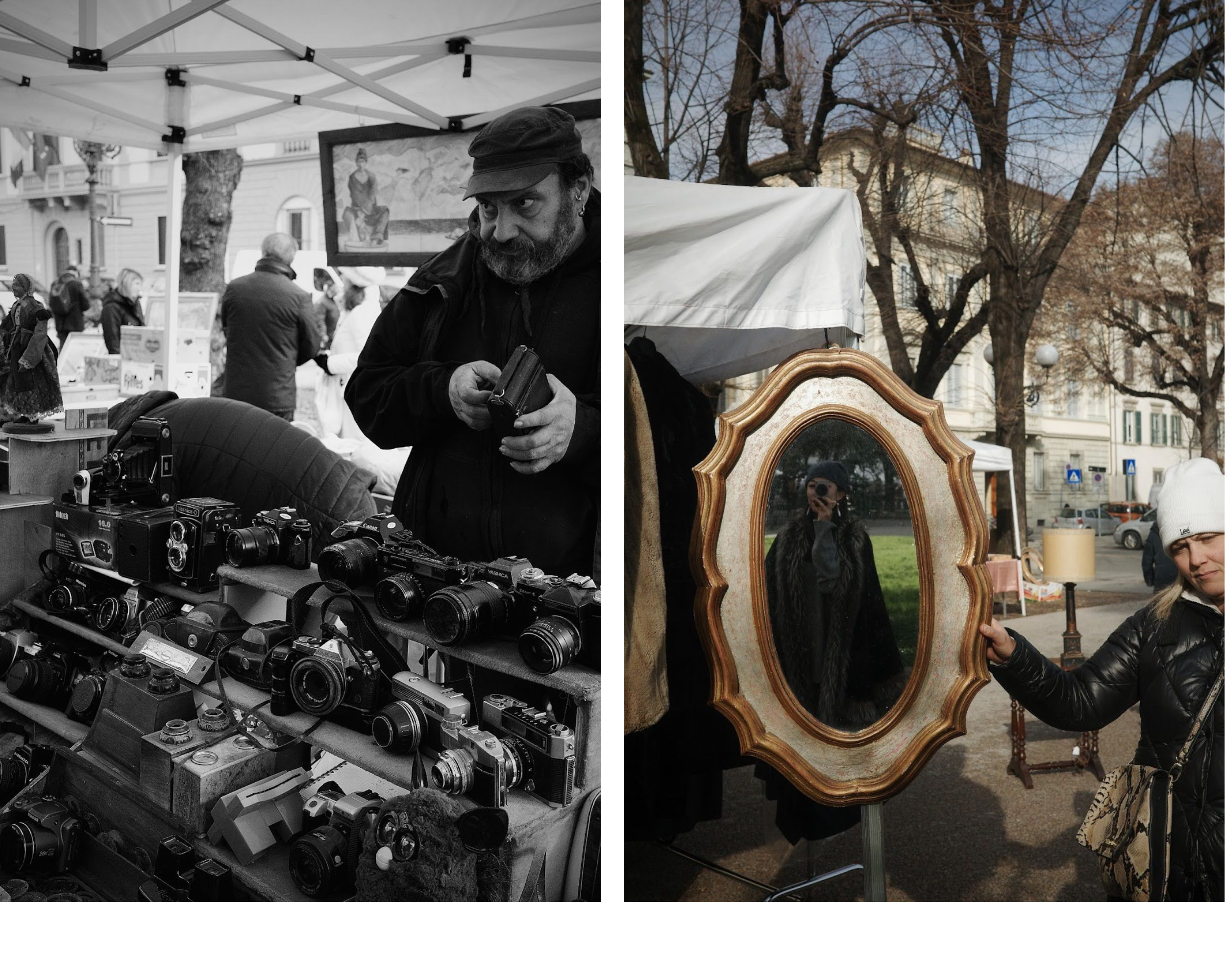
At one stall, I asked a seller about a small object that caught my attention. Instead of giving me just a price, he started telling me where it came from and why he liked it. The conversation went on longer than I expected, and at some point, it stopped feeling like a transaction. It felt more like he was passing something on.
That moment stayed with me. It made me realize that in these markets, objects are not treated as things that lose value over time. They move from one person to another, carrying traces of previous lives. Their value is not erased by age. If anything, it becomes part of what makes them meaningful.
I started noticing the same pattern outside the markets too. Sometimes, walking through smaller streets, I would pass a shop that looked almost unremarkable from the outside. Then I would step in and find rooms filled with furniture collected over many years, sometimes extending into dimly lit basements where old leather sofas and wooden pieces seemed to hold decades of history. These places were not trying to attract attention. They were just there, waiting to be discovered.
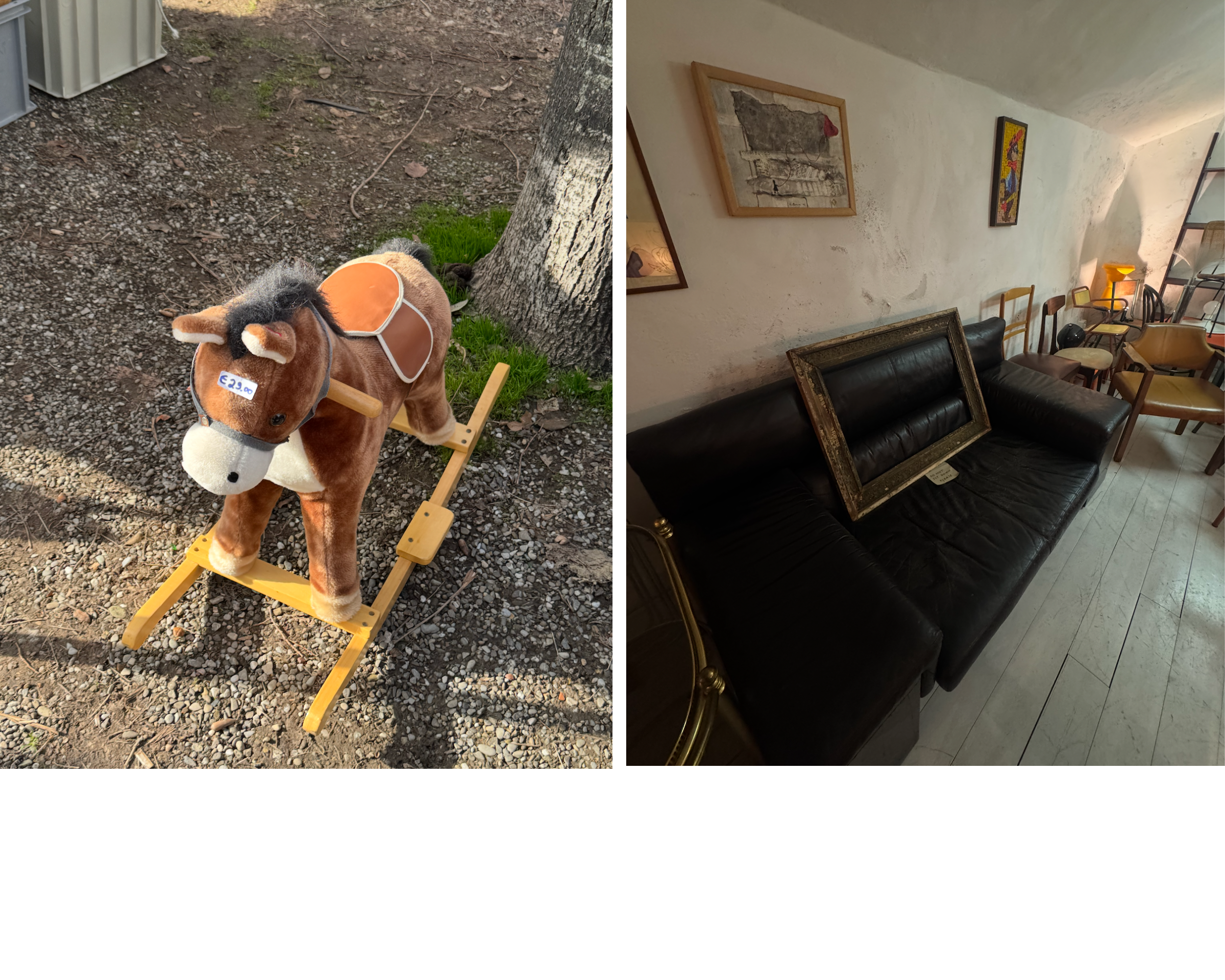
What I found most interesting is how different this feels from the way sustainability is often discussed. Here, no one is trying to label it or turn it into something strategic. It exists without needing to be explained. There is simply a shared understanding that old things still have value, and that value does not disappear just because something is no longer new.
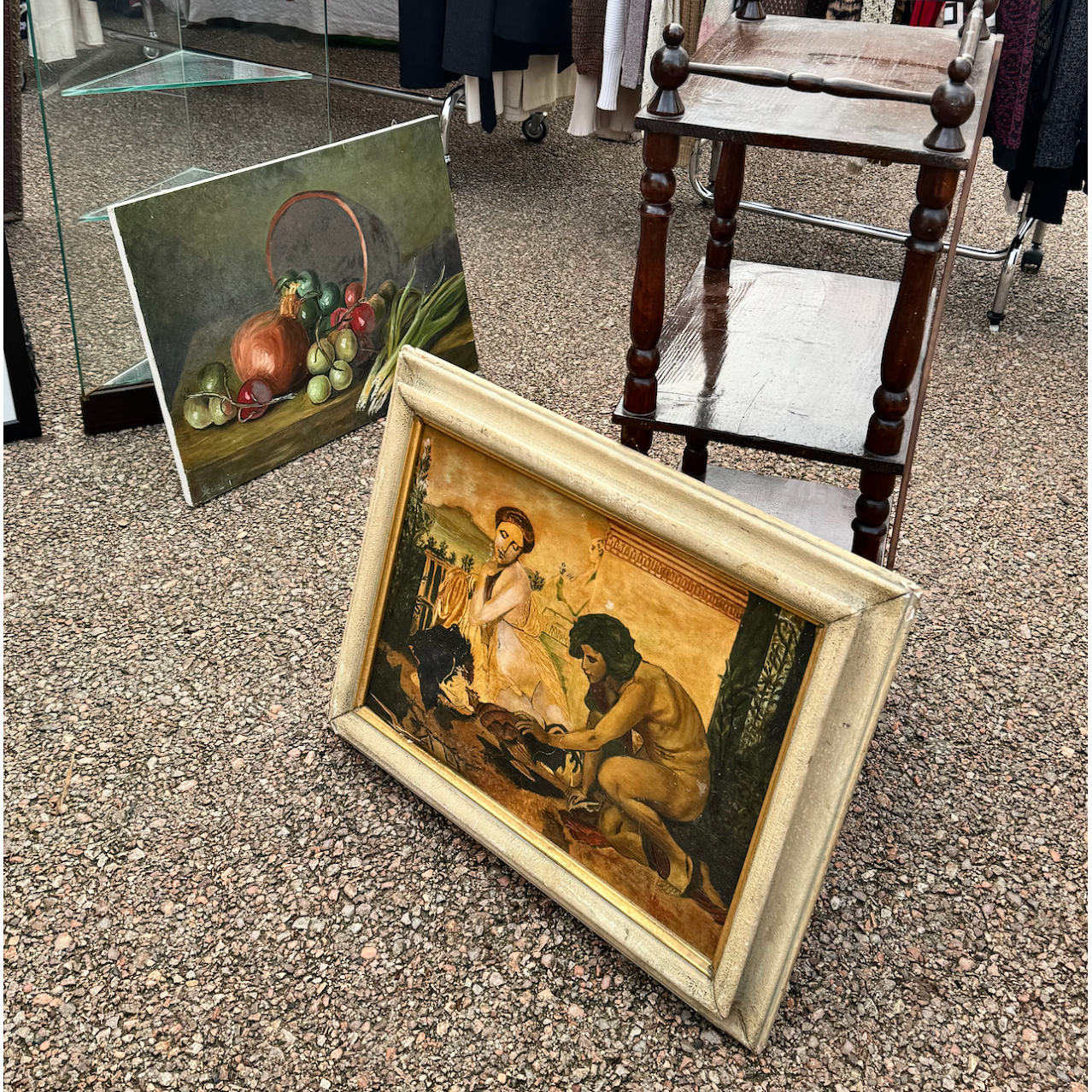
For me, this changed how I think about sustainability in a business context. It is easy to focus on building new solutions, new systems, and new technologies. But these markets suggest that another approach already exists. One that is based on durability, reuse, and a different way of seeing value.
Florence’s markets reminded me that sustainability can be deeply ordinary. And maybe that is part of its strength. It does not always come from something new. Sometimes, it comes from the simple decision to keep something, to care for it, and to pass it on.
